

The Steam Deck has established itself as the leading handheld gaming PC since its 2022 launch. Despite growing competition from devices like the ROG Ally and Legion Go, Valve’s handheld remains the most user-friendly option for PC gaming on the go. With no Steam Deck 2 expected until at least 2026 according to Valve statements, now is an excellent time to explore the current Steam Deck models available.
This guide will help you choose between the three Steam Deck models currently in production, understand key differences, and determine which option provides the best value for your gaming needs and budget.
Current Steam Deck Models: Your Three Options
Valve has streamlined its lineup to three distinct options, each targeting different user needs and budgets:
256GB LCD Model – $399
The most affordable option features the original 7-inch LCD display with 60Hz refresh rate. This entry-level model includes 256GB NVMe SSD storage and a basic carrying case. While lacking premium OLED features, it provides access to the complete Steam Deck experience at the most accessible price point.
This model targets first-time handheld PC buyers, budget-conscious gamers, and those primarily interested in indie games or retro gaming.

512GB OLED Model – $549
The mid-tier model represents the sweet spot for most buyers. It features the upgraded 7.4-inch OLED display with 90Hz refresh rate, HDR support, and improved color reproduction. The device includes 512GB faster NVMe SSD storage and the premium carrying case.
Hardware improvements include a more efficient 6nm AMD APU, faster 6400 MT/s LPDDR5 RAM, and a larger 50Wh battery extending gaming sessions considerably.
1TB OLED Model – $649
The premium model offers maximum storage and exclusive features. Beyond the 1TB NVMe SSD, this model includes anti-glare etched glass screen reducing reflections during outdoor gaming. The exclusive carrying case features a removable liner for versatility.
This appeals to enthusiasts with large game libraries, power users demanding premium experiences, and gamers prioritizing convenience over budget considerations.
Steam Deck Models: LCD vs OLED Core Differences
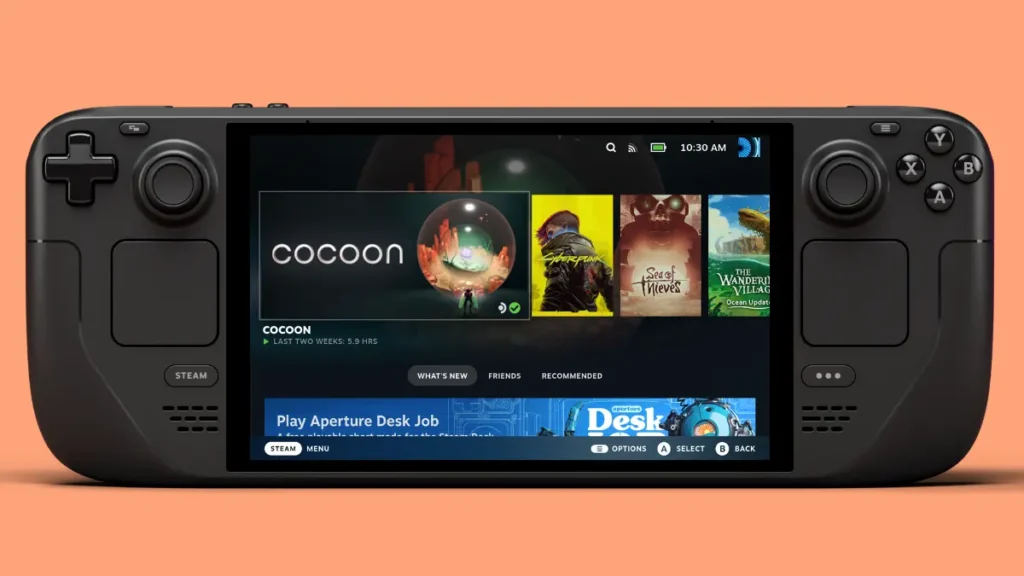
The fundamental choice when selecting between these options comes down to display technology. The differences extend beyond screen quality, impacting performance, battery life, and user experience.
Display and Performance Upgrades
The LCD model’s 7-inch screen offers adequate gaming visuals with 400 nits brightness. However, OLED models feature larger 7.4-inch displays with superior contrast ratios, deeper blacks, and vibrant colors making games more immersive. The 90Hz refresh rate provides smoother motion during fast-paced gaming.
HDR support on OLED models enables compatible games to display wider color gamut and improved dynamic range, particularly beneficial for modern AAA titles.
Hardware Improvements
OLED Steam Deck models incorporate a refined 6nm AMD APU compared to the 7nm chip in LCD models. While core performance remains similar, the newer processor offers improved power efficiency and better thermal management.
The upgraded RAM (6400 MT/s vs 5500 MT/s) provides marginal performance improvements. More significantly, the larger 50Wh battery extends gaming sessions by 30-50% compared to the 40Wh battery in LCD models.
Storage and Gaming Performance
Understanding storage needs and performance expectations helps determine which option suits your gaming habits.
Storage Requirements
Modern AAA games require 50-100GB storage space. The 256GB LCD model accommodates 2-3 large games, while the 512GB OLED holds 4-6 titles, and the 1TB OLED manages 8-12 large games plus numerous indies.
All models support microSD expansion, though performance differs from internal SSD storage. High-quality 1TB microSD cards cost $80-120, making the 512GB OLED upgrade economically sensible.

Gaming Performance
All Steam Deck models share identical GPU and CPU specifications. Expect 30-60 fps at native 1280×800 resolution, with AAA titles typically targeting 30-45 fps at medium settings. Steam Deck Verified games run optimally, while the Proton compatibility layer enables thousands of Windows games on SteamOS.
Which Steam Deck Models Should You Choose?
Selecting the right option depends on your gaming habits, budget constraints, and quality expectations:
Choose 256GB LCD Steam Deck Model If:
Your budget is capped at $400 and the additional $150 for OLED features exceeds your spending limit. This works excellently for retro gaming enthusiasts, indie game collectors, and casual gamers playing one or two games at a time.
The LCD model suits first-time handheld PC users wanting to experience the Steam Deck ecosystem before potentially upgrading later.
Choose 512GB OLED If:
You want the best overall value and can accommodate the $549 price point. This represents optimal balance between features and cost, providing significant display quality improvements, better battery life, and adequate storage for most gaming patterns.
This suits regular handheld gamers who play mixed modern and indie titles, users appreciating premium display quality, and buyers planning to use Steam Deck as a primary gaming device.
Choose 1TB OLED Steam Deck Model If:
Storage convenience and premium features justify the $649 investment. This eliminates storage anxiety, accommodates large game collections without constant management, and provides anti-glare screen for outdoor gaming.
The 1TB model appeals to enthusiasts with extensive Steam libraries, power users demanding maximum convenience, frequent travelers needing diverse game selection offline, and buyers viewing Steam Deck as a long-term investment.
Market Context and Competition
The handheld gaming PC market has evolved since Steam Deck’s launch. ASUS ROG Ally and Legion Go offer superior raw performance but run Windows, creating challenges that Steam Deck’s SteamOS solves.
Steam Deck’s integrated ecosystem, consistent updates, and optimized interface provide significant advantages. Valve’s direct involvement ensures seamless hardware-software integration, while the verified program guarantees game compatibility and Proton expands Windows game support.
Essential Accessories and Total Cost
Understanding complete ownership costs helps make informed decisions. Key accessories include:
- 256GB LCD: Budget $100 for microSD cards + $40 for premium case = $539 total
- 512GB OLED: Add $60 for dock/accessories = $609 total
- 1TB OLED: Add $60 for dock/accessories = $709 total
These calculations show the 512GB OLED provides excellent value when factoring necessary accessories.

Final Verdict: Best Steam Deck Models for Different Buyers
After analyzing features, performance, and value across all Steam Deck models, the 512GB OLED model emerges as the optimal choice for most buyers. It provides substantial display quality improvements, better battery life, adequate storage, and premium build quality at reasonable price premium over the LCD model.
The 256GB LCD suits budget-conscious buyers and casual gamers, while the 1TB OLED appeals to enthusiasts and power users. However, the 512GB OLED strikes perfect balance between features and affordability.
For buyers still uncertain, consider your gaming habits: choose LCD for budget constraints and retro gaming, OLED 512GB for balanced modern gaming, or OLED 1TB for maximum convenience and large game libraries.
The Steam Deck remains the most user-friendly handheld gaming PC available in 2025, and any of these three models will provide excellent portable gaming experiences for years to come.

Hardware. Specs. Benchmarks.
LoadMaster breaks down handheld performance to the last frame. Specializing in deep comparisons between devices like the Switch 2, Steam Deck, and ROG Ally, he focuses on specs, chipsets, battery life, and thermal behavior. If it’s measurable, he’s on it.