
After the lukewarm reception of the original MSI Claw with Intel processors, MSI has returned with the Claw A8, marking a significant shift in strategy. This is the first gaming handheld to feature AMD’s Ryzen Z2 Extreme processor, and it represents MSI’s attempt to compete directly with established players like the ASUS ROG Ally X and Lenovo Legion Go. The question is: does the MSI Claw A8 deliver enough performance and value to justify its premium price tag?
MSI Claw A8: Design and Build Quality
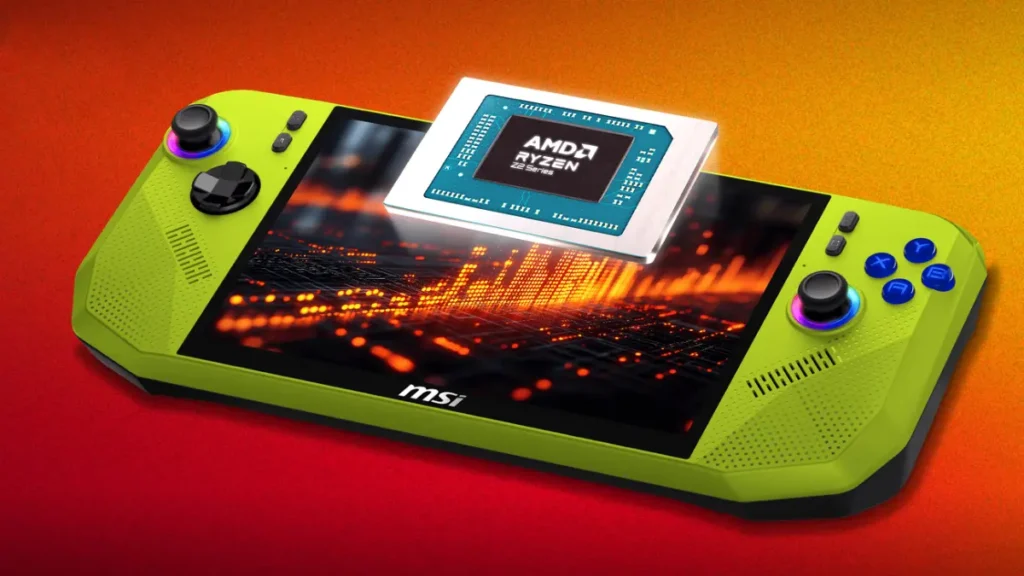
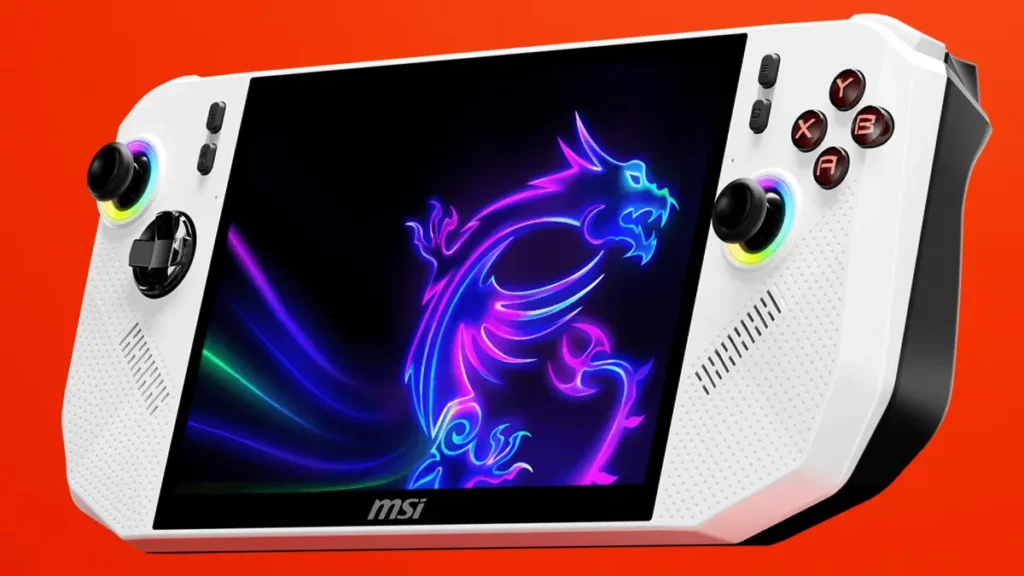
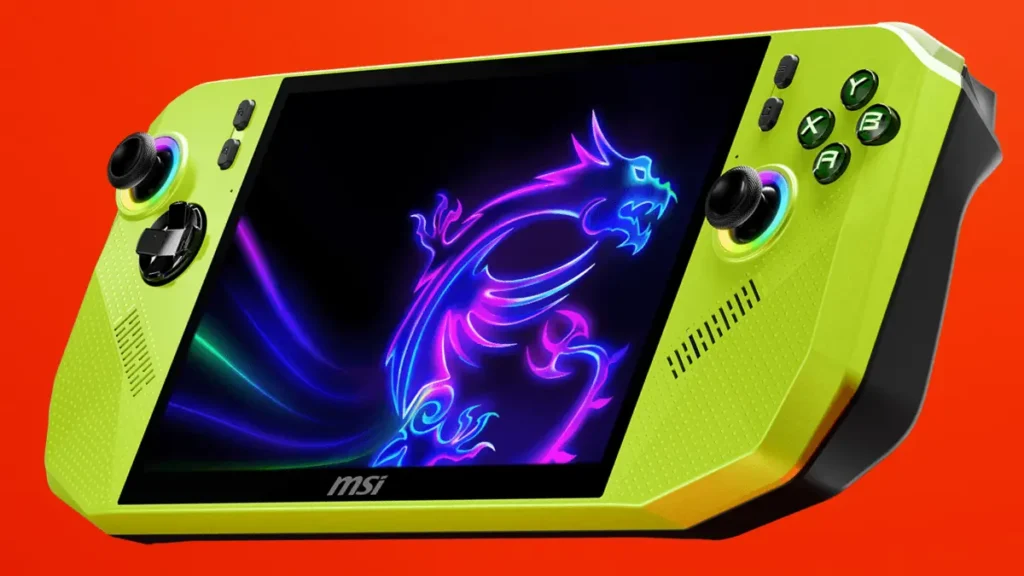
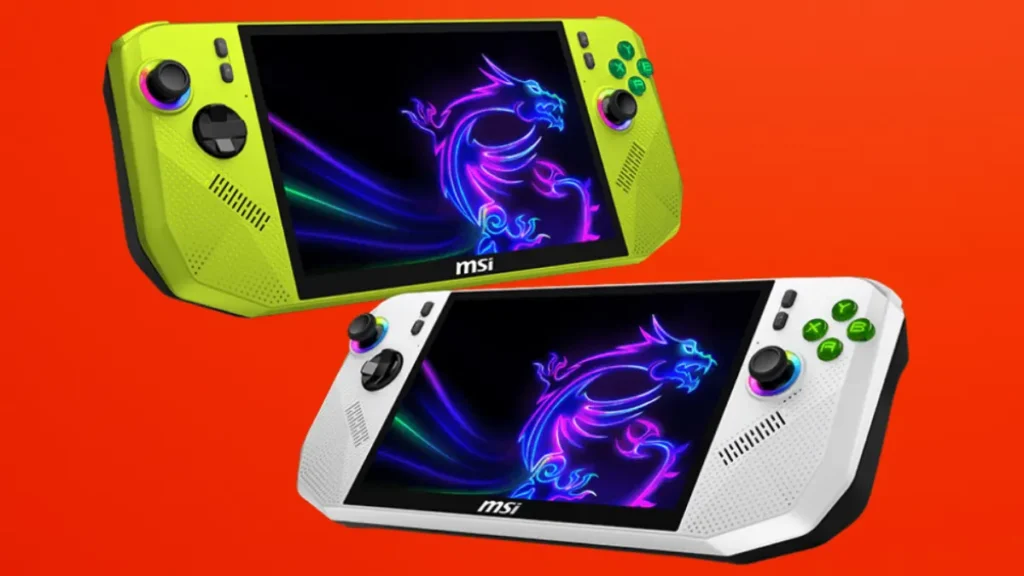
The MSI Claw A8 immediately stands out in the handheld market with its bold aesthetic choices. Available in white or neon green finishes, this device breaks away from the sea of black gaming handhelds that dominate the market. While the neon green colorway won’t appeal to everyone, it’s a refreshing departure that gives the device a distinctive personality.
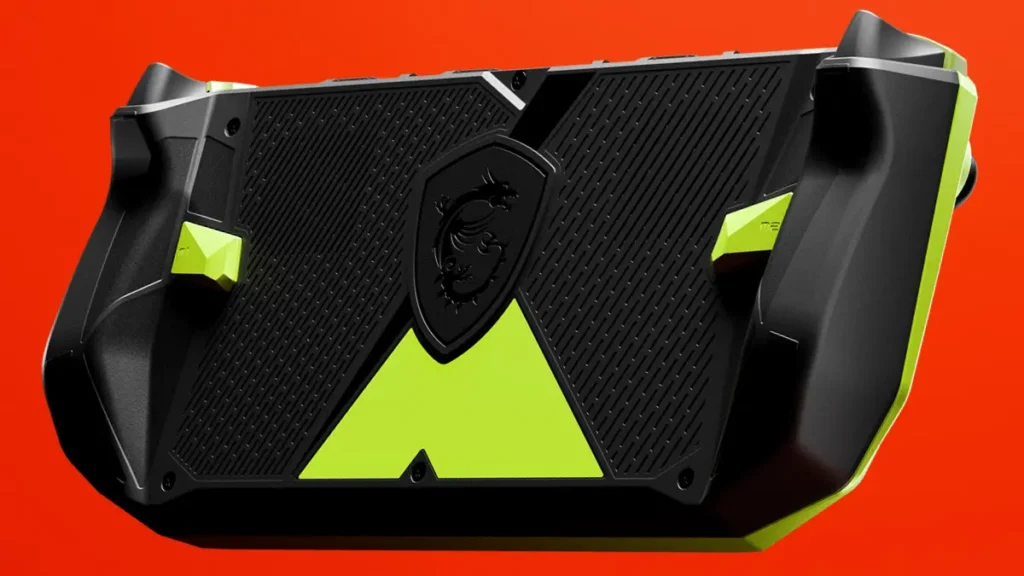
MSI has refined the ergonomics significantly compared to the original Claw. The hand grips feature a more angular, blocky design with diamond-textured surfaces that provide excellent grip during extended gaming sessions. Despite initial concerns about sharp edges, the overall comfort level is impressive, with the weight distribution balanced well across the 765-gram chassis. Yes, this is heavier than the ROG Ally X (under 700g), but the ergonomic design helps mitigate fatigue during longer play sessions.
The controls deserve special mention. The MSI Claw A8 features Hall Effect analog sticks and triggers, which provide microscopic precision and exceptional durability compared to traditional potentiometer-based controls. These magnetic sensors eliminate stick drift concerns and offer smooth, responsive input. The analog sticks feature diamond-textured rims with bowl-shaped centers that naturally guide your thumbs for steady aim and fluid control.
The D-pad, positioned for easy reach with a distinct shape and glossy finish, is easy to identify by touch alone. However, some users have noted that it requires excessive pressure during intense gaming sessions, which can be uncomfortable. The rear macro buttons are raised and contoured with distinct height shifts that align naturally with your grip, making them easy to find and press without looking.
Display and Audio Excellence
The MSI Claw A8 sports an 8-inch IPS display with a resolution of 1920 x 1200 pixels. This offers a 16:10 aspect ratio that provides extra vertical space compared to standard 1080p screens. The 120Hz refresh rate with Variable Refresh Rate (VRR) support ensures smooth gameplay. Additionally, the display covers 100% of the sRGB color gamut with typical brightness reaching 500 nits.
This is one of the best screens available on gaming handhelds today. The colors are vibrant and the refresh rate eliminates stuttering in supported games. The brightness is sufficient for both indoor and outdoor use. The only thing that would elevate this display further would be OLED technology. Nevertheless, at this price point, the IPS panel delivers excellent quality for both casual and competitive gaming.
Audio performance is surprisingly impressive. According to MSI’s official specifications, the Claw A8’s speakers deliver 72.5% higher output sound pressure than competitors, with low-frequency energy exceeding rivals by 58.3%. Certified for Hi-Res Audio and enhanced with DTS technology, the dual speakers provide a rich, spatial soundscape with pinpoint precision and stunning clarity. The device even features Force-Feedback Audio, where the surface vibrates in sync with sound for added immersion. While dedicated gaming headphones will always provide superior audio, the built-in speakers are more than adequate for casual gaming sessions and actually manage to overcome fan noise without significant distortion.
Hardware Specifications
At the heart of the MSI Claw A8 lies the AMD Ryzen Z2 Extreme processor. This APU features 8 cores and 16 threads with a base clock of 2 GHz and boost speeds up to 5.0 GHz. The integrated RDNA 3.5 GPU offers 16 compute units with 8GB of dedicated VRAM allocation from the system memory pool.
The device comes equipped with 24GB of LPDDR5X-8000 RAM, a significant upgrade from many competing handhelds that typically ship with 16GB. This extra memory headroom proves valuable for demanding AAA titles and multitasking scenarios. Meanwhile, storage consists of a 1TB M.2 PCIe Gen 4×4 SSD, which is easily upgradable through the removable backplate.
Connectivity options include Wi-Fi 7 and Bluetooth 5.4 for wireless connections, two USB4 Type-C ports (each capable of 40 Gbps throughput), a microSD card reader for storage expansion, and a 3.5mm audio jack. Additionally, the multifunction power button doubles as a fingerprint sensor for Windows Hello authentication.
Powering all this hardware is an 80Wh battery, matching the capacity found in the ROG Ally X and representing best-in-class battery capacity for the handheld gaming market. MSI pairs this with 65W fast charging support.
| Specification | Details |
|---|---|
| System | AMD Ryzen Z2 Extreme (8C/16T, 2.0-5.0 GHz) | RDNA 3.5 GPU (16 CUs) |
| Memory & Storage | 24GB LPDDR5X-8000 | 1TB PCIe Gen 4×4 SSD (upgradable) |
| Display | 8″ IPS, 1920×1200, 120Hz VRR, 500 nits, 100% sRGB |
| Controls | Hall Effect sticks & triggers, programmable macro buttons |
| Battery | 80Wh, 65W fast charging (2.5-9 hours depending on workload) |
| Connectivity | Wi-Fi 7, BT 5.4, 2x USB4 Type-C (40Gbps), microSD, 3.5mm jack |
| Operating System | Windows 11 Home |
| Weight & Size | 765g, 299.5 x 126.2 x 24mm |
| Price | £849 (UK) / €999 (EU) / ~$899-999 (US, estimated) |
MSI Claw A8 Performance: Where Z2 Extreme Shines
The AMD Ryzen Z2 Extreme delivers tangible performance improvements over the previous generation Ryzen Z1 Extreme processors found in competing devices. MSI claims up to 30% performance improvement at maximum power levels. Indeed, real-world testing confirms gains of 20-30% at the 33W power profile, with 20-25% improvements at the more battery-friendly 17W setting.
In 3DMark Fire Strike, the Claw A8 scores 8,358 points, compared to 6,849 for the ROG Ally X with Z1 Extreme. In 3DMark Time Spy, it achieves 3,638 points versus 2,926 for the Ally X. These synthetic benchmarks translate to real-world gaming performance gains across a wide range of titles.
In real-world gaming scenarios, demanding AAA titles become highly playable with appropriate optimization. For example, using FSR upscaling combined with carefully balanced high and medium settings in Spider-Man 2, the device achieves stable 60 FPS performance at 1080p resolution.
The MSI Claw A8 offers flexible TDP control ranging from 6W for indie games up to 35W sustained (with 40W short bursts and 48W peak power for 10 seconds). Consequently, at 6W running retro or indie titles like Teenage Mutant Ninja Turtles: Shredder’s Revenge, the total system power draw hovers around 8.7W at 50% brightness and 60Hz, translating to over 9 hours of gameplay from the 80Wh battery.
For more demanding gaming, the 3DMark battery test shows the Claw A8 lasting 2 hours and 32 minutes. Unfortunately, this falls short of the ROG Ally X’s 3 hours and 4 minutes with the same battery capacity. However, MSI offers an Endurance Mode that extends battery life for less demanding games. Testing shows approximately three hours of continuous gameplay in indie titles at 60 FPS with medium brightness settings.
Thermal Management
MSI’s Cooler Boost HyperFlow thermal solution features dual fans with 77 ultra-thin 0.1mm blades each, paired with two heat pipes. This innovative design redirects airflow to cool both the CPU and display simultaneously. Additionally, it keeps components cool while ensuring the touchscreen remains comfortable to the touch during gaming sessions.
The perforated fan shroud maximizes intake and exhaust efficiency for optimal cooling performance. Even under sustained load at higher TDP settings, surface temperatures remain comfortable for handheld use. The thermal management allows the Ryzen Z2 Extreme to maintain boost clocks without throttling during extended gaming sessions.
Software Experience
The MSI Claw A8 runs Windows 11 Home out of the box, which remains a mixed blessing for handheld gaming. You gain access to the entire PC gaming library and can run any Windows application. However, the desktop operating system is not optimized for touchscreen-based handheld use.
MSI attempts to address this with MSI Center M, a customizable game launcher that serves as the primary interface. Center M allows you to scan game directories across multiple launchers (Steam, Epic Games Store, Xbox, etc.), change cover art, and customize backgrounds. The interface is straightforward and functional, though it lacks the polish and feature set of ASUS’s Armoury Crate software.
Quick Settings integration with Xbox Game Bar provides in-game access to system controls through a compact, translucent UI that occupies roughly one-third of the screen. This allows you to adjust TDP, fan curves, and RGB lighting without leaving your game. Specifically, the software offers three AI-driven performance profiles: Performance mode for maximum power, Endurance mode for battery life, and Manual mode for granular control over CPU/GPU power allocation and fan behavior.
Despite these efforts, Windows 11 remains cumbersome on a handheld device. Background processes consume system resources and battery life, and touchscreen navigation through Windows interfaces proves frustrating. Microsoft’s Xbox Full Screen Experience update promises to address many of these concerns. Early access is available in Windows 11 25H2. This update could significantly improve the handheld gaming experience on Windows devices. As of this review, the software experience remains one of the Claw A8’s weaknesses.
Value Proposition and Competition
Here’s where the MSI Claw A8 faces its biggest challenge. The device is priced at £849 in the UK and €999 in Europe, with US pricing yet to be officially announced but expected to fall in the $899-$999 range based on regional pricing patterns.
This positions the Claw A8 in premium territory. The ASUS ROG Ally X with Ryzen Z1 Extreme retails for $899. The standard ROG Ally can be found for significantly less during sales. The Steam Deck OLED offers excellent gaming performance and a superior software experience through SteamOS. It costs just $549 for the base model. For a detailed analysis of how these competing handhelds stack up against each other, see our Steam Deck vs ROG Ally comparison.
The performance gains of the Ryzen Z2 Extreme over the Z1 Extreme are real and measurable at 20-30%, but they’re not transformational. If you already own a Z1 Extreme-powered handheld like the ROG Ally X or Legion Go, upgrading to the Claw A8 is difficult to justify. The improvements are incremental rather than revolutionary.
For gaming enthusiasts entering the handheld PC market for the first time, the Claw A8 represents a powerful option with future-proof specifications. The 24GB of RAM, large battery, excellent display, and comfortable ergonomics make it a solid choice. However, the high price demands careful consideration against alternatives that offer similar gaming experiences at lower costs.
MSI Claw A8 Verdict
The MSI Claw A8 represents a significant improvement over MSI’s first attempt at a gaming handheld. The switch to AMD’s Ryzen Z2 Extreme processor delivers tangible performance benefits. Moreover, the ergonomics are well-refined, and the display and audio quality are excellent. Hall Effect controls eliminate long-term durability concerns. Furthermore, the device offers enough power to handle demanding AAA games with appropriate settings adjustments.
However, the high price point and relatively modest gains over the previous generation Ryzen Z1 Extreme make this a device for enthusiasts rather than mainstream gamers. The Windows 11 software experience, while improving, still lags behind the streamlined interface of SteamOS on the Steam Deck. The device’s weight and the sharp-edged D-pad may also deter some users during extended gaming sessions.
| MSI Claw A8 | |
|---|---|
| Overall Score | 7.5/10 |
| Pros |
|
| Cons |
|
The MSI Claw A8 is a capable gaming handheld that delivers on its performance promises. It’s best suited for PC gaming enthusiasts who want maximum power in a portable form factor and are willing to pay premium prices for incremental improvements. For most users, waiting for price reductions or considering alternatives like the ROG Ally X or Steam Deck OLED makes more financial sense. If you already own a Z1 Extreme device, there’s little reason to upgrade. But if you’re entering the handheld PC gaming market and want the most powerful option currently available, the MSI Claw A8 delivers the goods—just be prepared to pay for them.

Hardware. Specs. Benchmarks.
LoadMaster breaks down handheld performance to the last frame. Specializing in deep comparisons between devices like the Switch 2, Steam Deck, and ROG Ally, he focuses on specs, chipsets, battery life, and thermal behavior. If it’s measurable, he’s on it.