
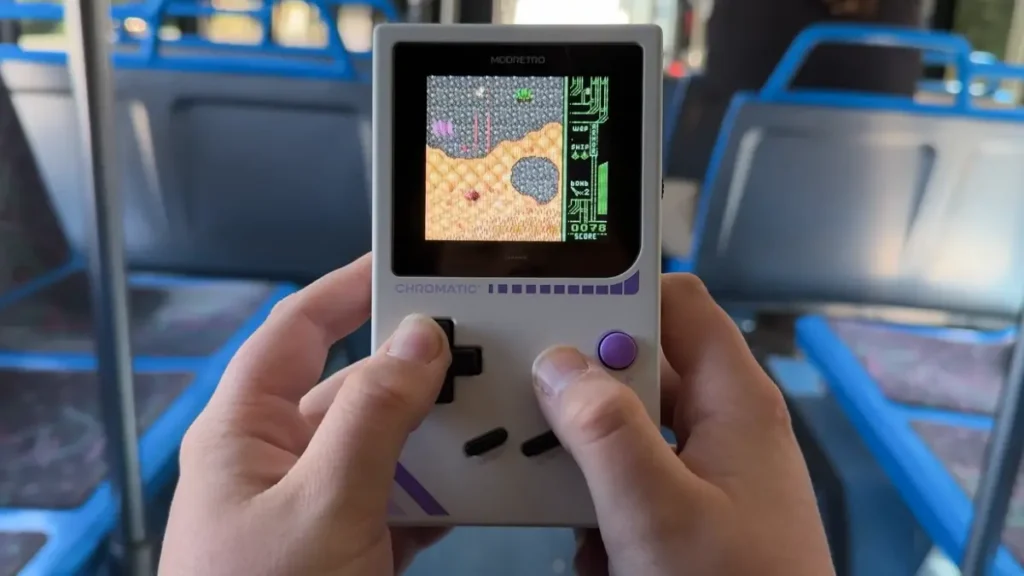
When Palmer Luckey, the founder of Oculus VR, announced he was entering the retro gaming scene, enthusiasts took notice. The ModRetro Chromatic isn’t just another emulation handheld—it’s a meticulously crafted homage to Nintendo’s Game Boy Color that uses FPGA technology to deliver an authentic experience while incorporating modern premium materials. After spending considerable time with this device, I can confidently say it represents one of the most thoughtful approaches to retro gaming hardware I’ve encountered.
| Specification | Details |
|---|---|
| Architecture | FPGA-based hardware emulation |
| Display | 2.56″ IPS LCD, 160×144 pixels, 1000 nits |
| Shell Material | Magnesium alloy with Gorilla/Sapphire Glass |
| Compatibility | Game Boy & Game Boy Color cartridges |
| Battery Life | ~6 hours (AA) / ~16 hours (rechargeable) |
| Connectivity | USB-C, Link cable port, IR sensor, 3.5mm jack |
| Dimensions | 5.2 x 3 x 1.2 inches (132 x 76 x 30 mm) |
| Weight | 6.2 oz (176g) |
| Price | $199 (Gorilla Glass) / $299 (Sapphire Crystal) |
Design and Build Quality
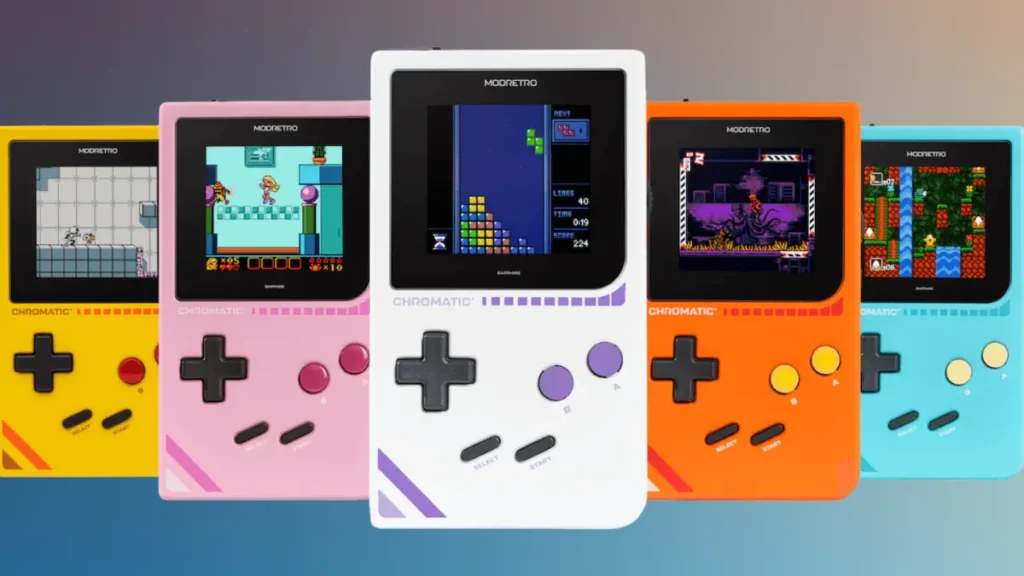
The ModRetro Chromatic immediately impresses with its magnesium alloy construction. This isn’t cheap plastic masquerading as premium—the thixomolded shell feels substantial and durable in hand. Weighing 6.2 ounces and measuring 5.2 x 3 x 1.2 inches, it’s slightly larger than the original Game Boy Color but maintains that classic handheld feel.
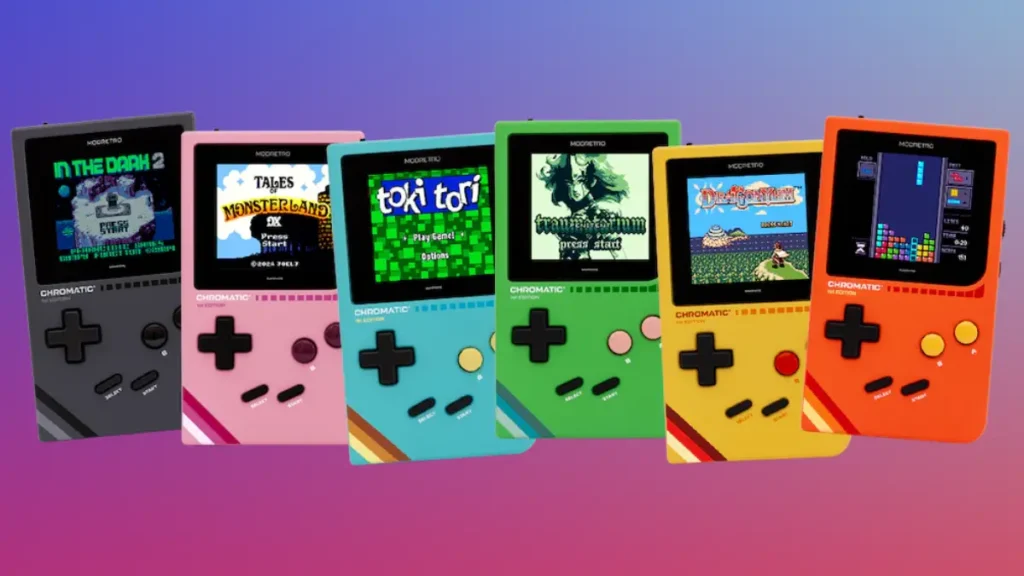
Two versions are available: a $199 model with Gorilla Glass and a $299 variant featuring Sapphire Crystal protection. The latter offers exceptional scratch resistance, addressing one of the biggest weaknesses of vintage Game Boy units. The paint job is flawless, with seven color options available including orange, green, pink, black, yellow, teal, and white.
The controls deserve special mention. The D-pad features a textured, grippy surface that provides excellent feedback, while the A and B buttons use smooth PBT polymer with a satisfying tactile response. These aren’t mushy replica buttons—they’re genuinely improved versions of the original design. Start and Select buttons sit comfortably below the screen, and a side-mounted menu button provides quick access to settings.
The rear cartridge slot accepts Game Boy and Game Boy Color cartridges with a reassuring click. Additionally, a larger cutaway reveals more of your game’s label, making it easy to identify which cartridge is inserted. Meanwhile, the battery compartment houses three AA batteries or an optional rechargeable power pack, accessed via a flush cover that won’t accidentally pop open.
ModRetro Chromatic Display Performance
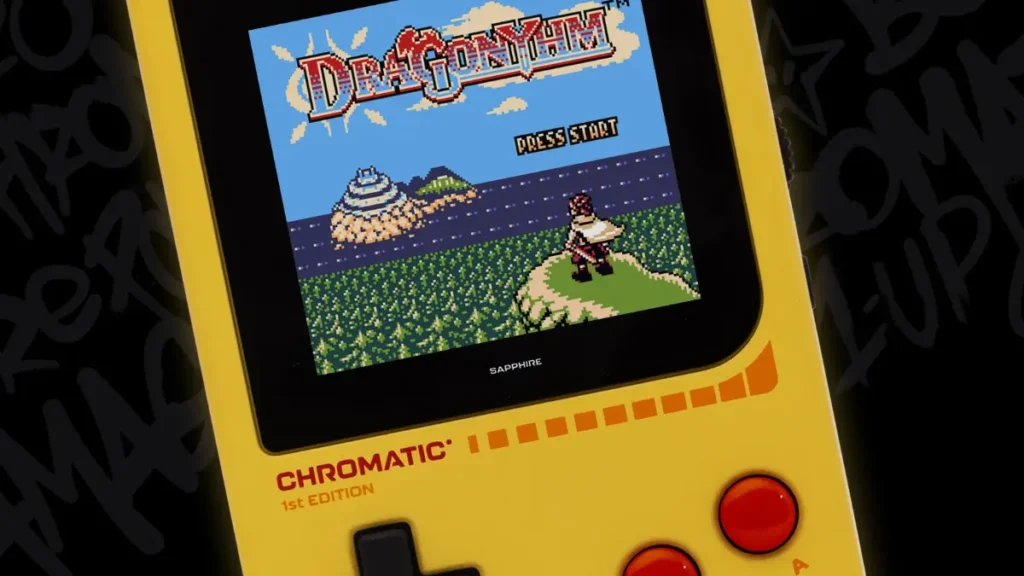
The 2.56-inch IPS LCD screen is where the ModRetro Chromatic truly shines. With a 160 x 144 pixel resolution matching the original Game Boy Color, it might seem counterintuitive to celebrate such low resolution in 2024. However, this decision is brilliant—it ensures pixel-perfect accuracy for games designed around these exact specifications.
The display cranks out 1,000 nits of brightness, making it readable in direct sunlight—something the original could never claim. ModRetro went further by calibrating the color temperature to match the Game Boy Color’s palette outside of standard RGB, ensuring games look exactly as developers intended. When comparing titles like The Legend of Zelda: Oracle of Seasons side-by-side with an original unit, the authenticity is remarkable.
The backlit IPS panel eliminates the need for perfect lighting conditions while maintaining that classic pixel aesthetic. Sprite art appears sharp and defined without the blur that sometimes plagues modern high-resolution displays attempting to scale retro graphics. It’s the perfect balance between vintage accuracy and modern convenience.
FPGA Technology and Compatibility
Unlike software emulation, the ModRetro Chromatic uses field-programmable gate array (FPGA) technology to replicate Game Boy hardware at the circuit level. This means your cartridges interact with genuine Game Boy architecture, not an approximation running through software layers.
The practical result? Flawless compatibility. I tested dozens of cartridges including Pokemon Blue, Kirby’s Dream Land, Donkey Kong Land 2, and The Legend of Zelda: Oracle of Ages—all performed identically to original hardware. Even specialty cartridges work: Perfect Dark’s rumble motor functions correctly, and Kirby Tilt ‘n’ Tumble’s gyroscope responds properly.
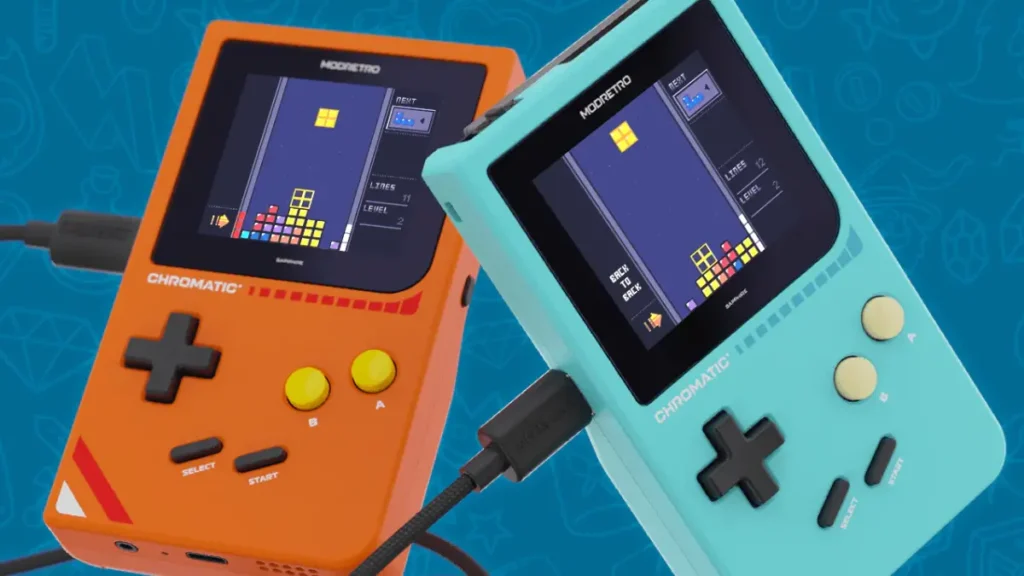
The device includes a link cable port and IR sensor at the top, enabling authentic multiplayer experiences. As a result, you can trade Pokemon or battle friends just like 1998, and the link cable works with other Chromatic units or potentially original Game Boy hardware.
Audio Quality
The built-in speaker significantly outperforms the original Game Boy Color, delivering surprisingly robust audio with actual bass presence. Many 8-bit soundtracks reveal subtle harmonies that were difficult to appreciate on vintage hardware’s weak speakers. The 3.5mm headphone jack provides an alternative for private listening sessions.
Software and Features
The onboard software remains intentionally streamlined. The OSD menu offers brightness controls, frame blending options, video output color correction, and palette selection for original Game Boy titles. Furthermore, those seeking monochrome aesthetics can choose from various color schemes reminiscent of different Game Boy models.
One standout feature is USB-C video output, allowing gameplay streaming directly to PC or Mac. This makes the Chromatic surprisingly relevant for content creators without requiring additional capture equipment.
Currently, the firmware lacks save state functionality, which some players will miss. However, ModRetro has demonstrated commitment to updates, with plans to expand features over time. A recent update enabled cartridge firmware updates, introducing new modes like Tetris Attack.
Battery Life and Power
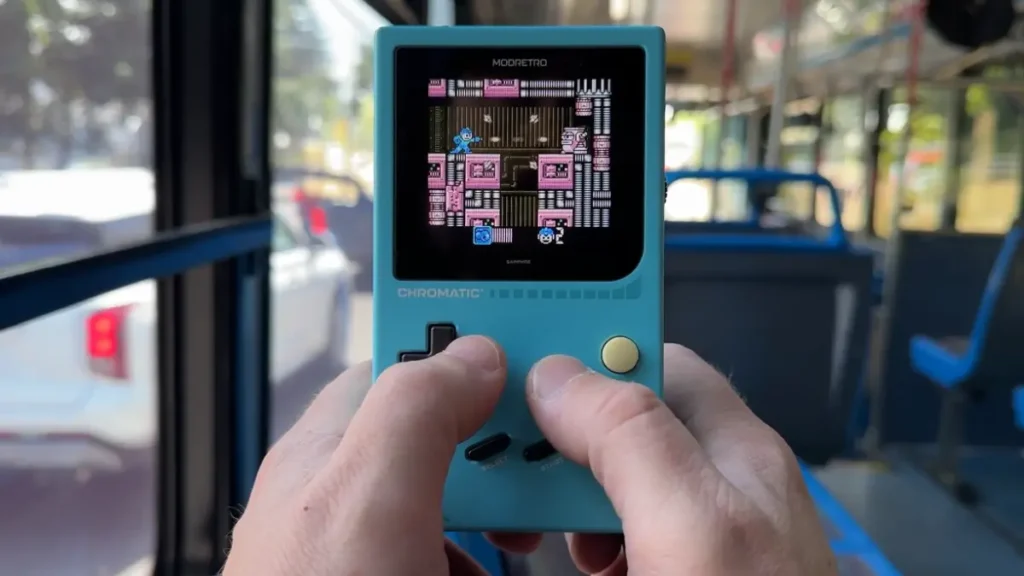
The three AA battery configuration might seem antiquated, but it aligns with ModRetro’s philosophy of longevity and repairability. When USB-C becomes obsolete in 2045, you’ll still be able to power this device with readily available batteries. Expect approximately six hours of gameplay per set of fresh AAs.
For those preferring modern convenience, a $29.99 rechargeable power pack promises up to 16 hours of playtime and charges via USB-C. It’s sold separately, but the modular approach ensures you’re never stuck with a dead built-in battery years down the line.
Game Library and New Releases
Every ModRetro Chromatic includes a physical cartridge of Tetris, modernized for Game Boy Color with multiple gameplay modes, save battery support, and profile management. Additionally, beyond bundled software, ModRetro publishes new Game Boy Color titles monthly, ranging from puzzle games to full RPGs.
These new cartridges are compatible with original Game Boy hardware, creating an ecosystem that benefits vintage console owners as well. For example, recent releases include Wicked Plague, a Metroidvania adventure, and re-releases like WayForward’s Sabrina: The Animated Series – Zapped. Notably, each game comes in a full retail box with manual and collectible charm.
ModRetro Chromatic: Value and Competition
At $199 for the Gorilla Glass version and $299 for Sapphire Crystal, the ModRetro Chromatic represents a significant investment. By comparison, the primary competitor, Analogue Pocket at $219, supports Game Boy Advance titles and additional systems through adapter cores, offering broader versatility.
However, the Chromatic’s singular focus on Game Boy and Game Boy Color delivers a more authentic experience for those specific platforms. The premium build quality, superior D-pad design, and dedicated Game Boy aesthetic make it the purist’s choice. Budget emulation handhelds like the Anbernic RG35XX Plus cost significantly less but sacrifice the authentic cartridge experience and FPGA accuracy. For those seeking versatile retro gaming on a budget, options like the Anbernic RG Cube offer good value, though they can’t match the Chromatic’s authenticity.
The question becomes: what’s authentic Game Boy gameplay worth to you? If you own a cartridge collection and want the definitive way to experience those games, the price becomes easier to justify. Factor in the durable construction designed to outlast cheap alternatives, and the value proposition strengthens.
Limitations to Consider
The lack of Game Boy Advance support will disappoint some collectors. If GBA games represent a significant portion of your library, the Analogue Pocket remains the better choice. The ModRetro Chromatic’s exclusive focus on GB and GBC means newer titles like Pokemon FireRed or Metroid Fusion won’t work.
The rechargeable battery pack being sold separately adds extra cost for those wanting built-in power. And while the firmware continues improving, current limitations like missing save states may frustrate players accustomed to modern emulation conveniences.
ModRetro Chromatic: Final Verdict
The ModRetro Chromatic succeeds as a premium tribute to one of gaming’s most iconic handhelds. Its FPGA implementation delivers genuine Game Boy authenticity while modern materials and display technology eliminate the frustrations of aging hardware. The exceptional build quality suggests this device will still function decades from now, potentially outliving the original consoles it honors.
This isn’t a budget option or a versatile multi-system emulation device. It’s a focused, premium experience for Game Boy and Game Boy Color enthusiasts who value authenticity and craftsmanship. If you’ve maintained a cartridge collection and want to experience those games as intended—but without squinting at an unlit screen—the ModRetro Chromatic represents the current pinnacle of that experience.
For purists, collectors, and anyone seeking the best possible way to play Game Boy Color cartridges, this is an easy recommendation despite the premium price. It’s heirloom-quality gaming hardware that respects the past while embracing thoughtful modern improvements.
| ModRetro Chromatic | |
|---|---|
| Overall Score | 9/10 |
| Pros |
|
| Cons |
|

Gaming through a sharper lens.
PixelPilot navigates the handheld gaming landscape with reviews, genre breakdowns, and playability insights. Whether it’s an indie gem or a blockbuster title, he delivers clear, focused analysis to help players find their next favorite game.