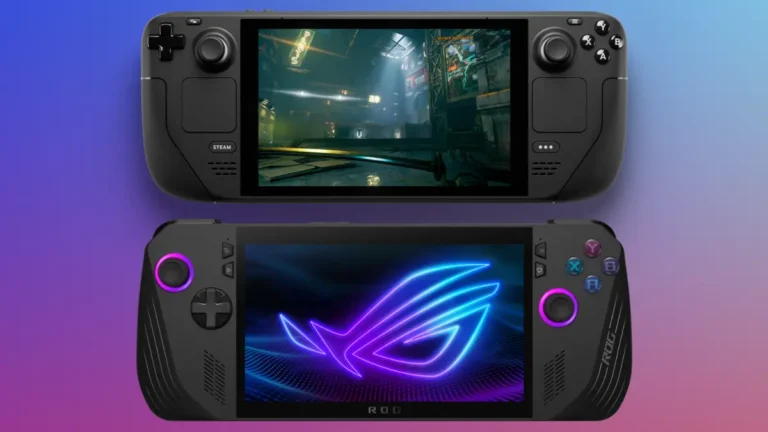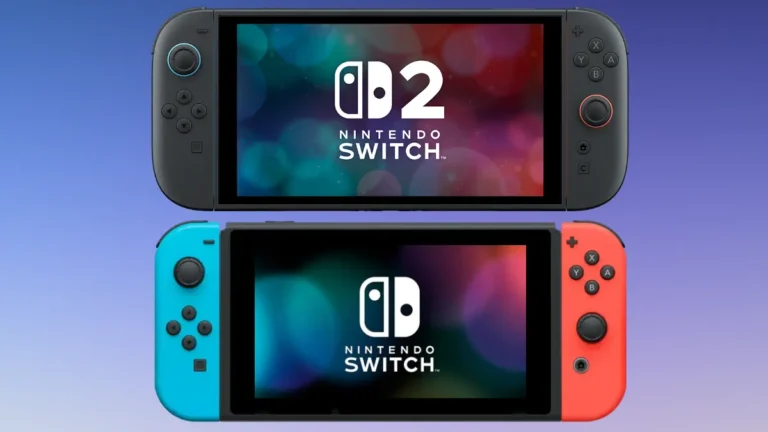

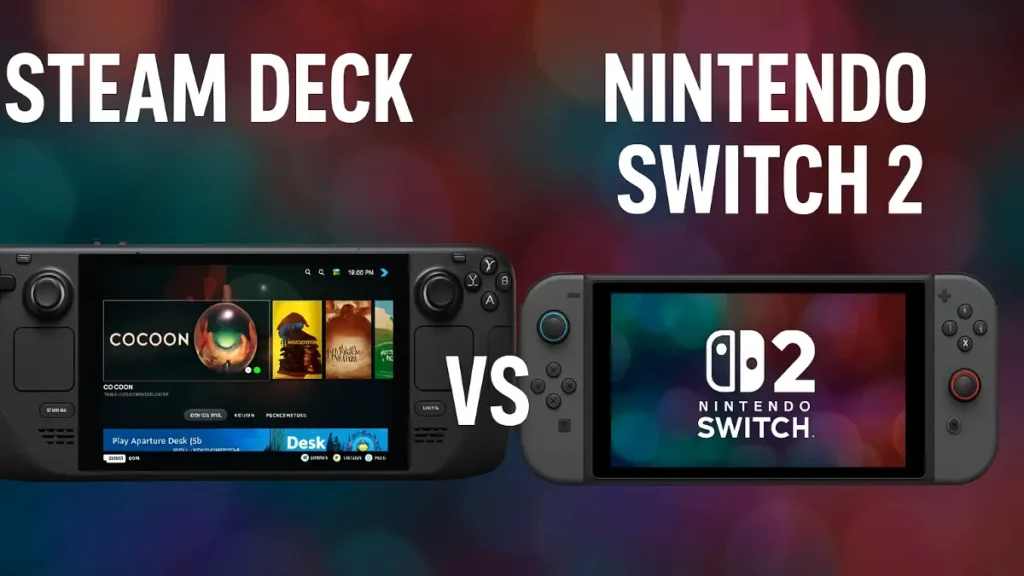
The Nintendo Switch 2 and Steam Deck represent the top tier of handheld gaming in 2025. Although both belong to the same device category, their design philosophies, hardware characteristics, and user experiences are fundamentally different. The Steam Deck, developed by Valve Corporation, brings PC gaming to the handheld space, while Switch 2 focuses on delivering polished, family-friendly gaming experiences with exclusive first-party titles.
This comprehensive comparison is designed to help you make an informed buying decision. It includes all currently available versions of the Steam Deck—both the base LCD model and the newer OLED variants (512 GB and 1 TB), all of which are actively sold and relevant to consumers. For anyone deciding between the two, this is your ultimate guide to the Switch 2 vs Steam Deck showdown.
Design & Portability
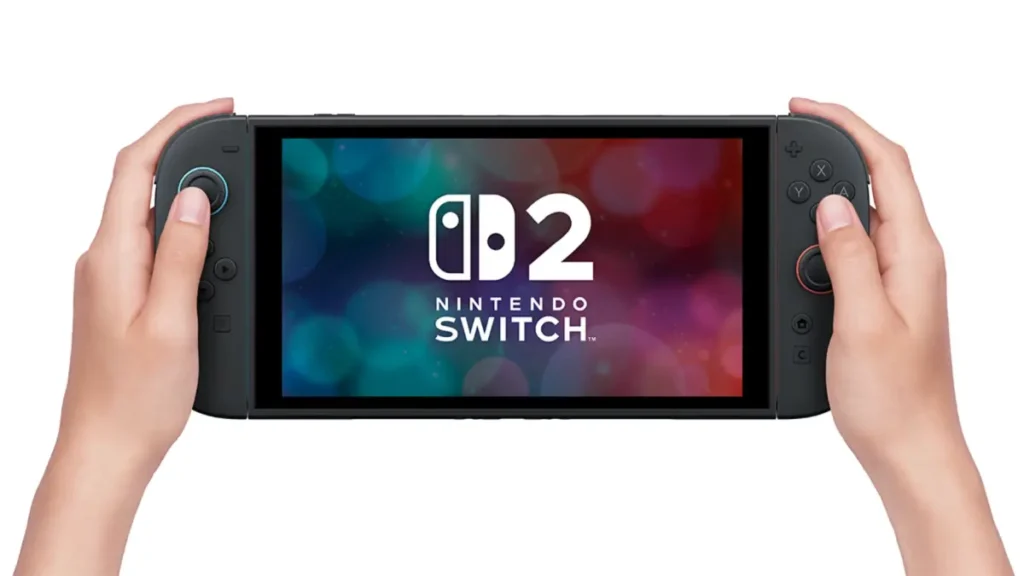
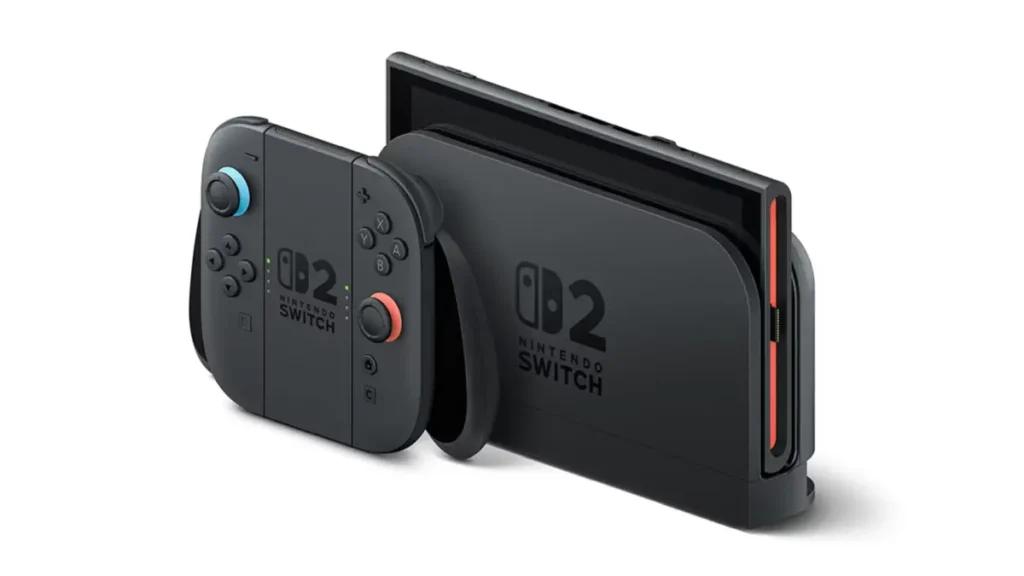
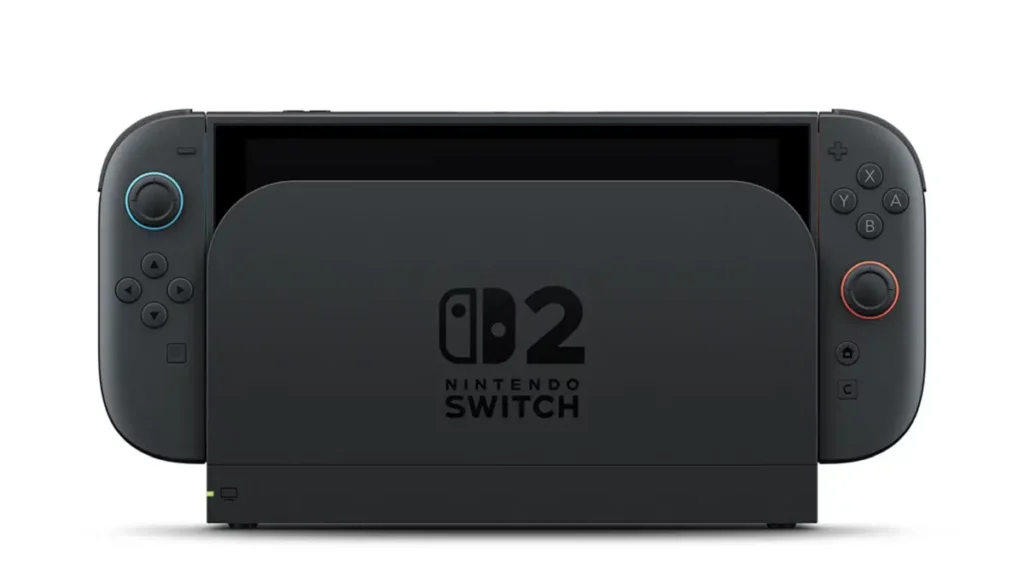
Nintendo Switch 2 continues the recognizable design language of its predecessors, with more refined edges, a slimmer profile, and improved build materials. Weighing approximately 420 g with Joy-Con controllers, it’s notably light and travel-friendly. Nintendo has better integrated the Joy-Cons, making them reportedly less prone to drift issues —though long-term reliability remains to be seen.
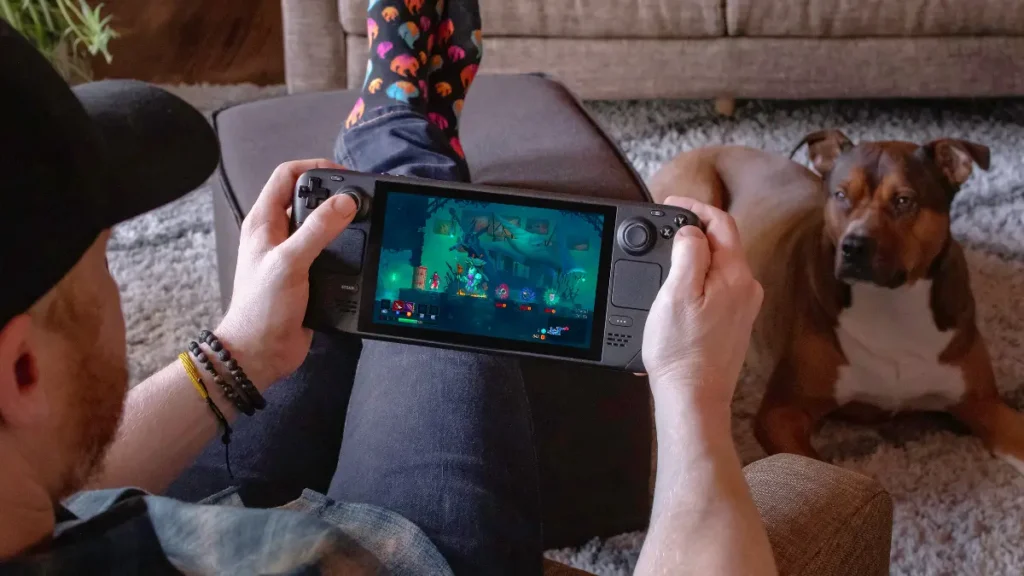
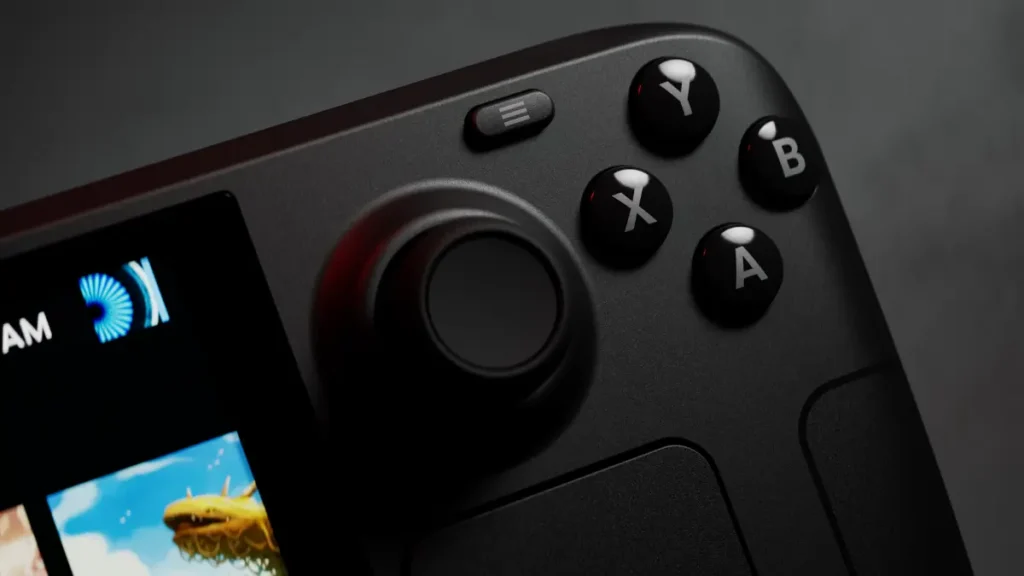
Steam Deck, in contrast, embraces a robust, PC-gaming-inspired design. Weighing about 669 g, it’s substantially heavier and less convenient for casual one-handed use or compact bags. However, it offers excellent ergonomics, well-placed controls, and trackpads that enhance usability for games not optimized for gamepads.
Switch 2 vs Steam Deck: Display Quality
Switch 2 features a 7.9″ LCD screen with decent brightness and contrast, but it’s not a major leap from previous models. The resolution is 1080×720 in handheld mode. While image quality is serviceable, many users and reviewers note that the display has issues with outdoor visibility and backlight uniformity. Compared to the OLED screen of the previous Switch OLED model, the Switch 2 display is a step backward in terms of color depth and contrast.
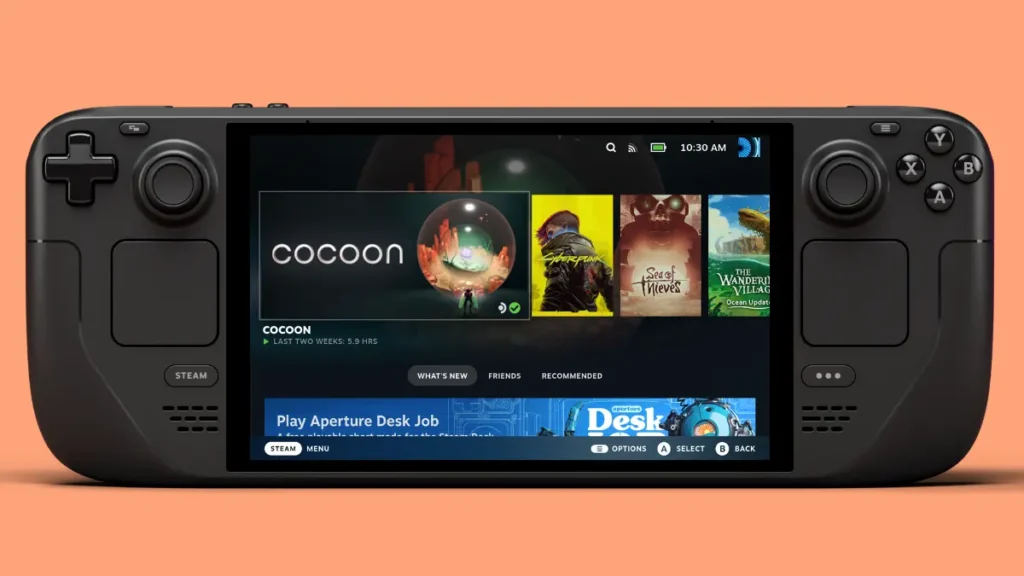
Steam Deck comes in two screen options: a 7″ IPS LCD (1280×800) on the base model, and OLED displays on the newer 512 GB and 1 TB versions. OLED variants deliver better contrast, richer blacks, a wider color gamut, and faster response times. They also offer improved battery life thanks to more efficient panels and higher battery capacity. Newer OLED batches also feature enhanced outdoor visibility and reduced glare.
Visually, the OLED Steam Decks are far superior. Advanced users will notice a clear difference, especially in dark scenes and HDR content. The Switch 2’s screen is functional but technically modest.
Performance & Hardware
Switch 2 is powered by a custom NVIDIA SoC with support for DLSS and hardware-accelerated ray tracing in docked mode. Performance targets 30–60 FPS depending on the game. With 8 GB of RAM, the system remains highly optimized and delivers a smooth experience for all first-party titles.
Valve’s handheld uses an AMD APU based on Zen 2 and RDNA 2 architecture, paired with 16 GB LPDDR5 RAM. It handles demanding titles like Elden Ring and Cyberpunk 2077 natively in handheld mode. However, this comes with higher power consumption and a need for fine-tuning (resolution, FSR, FPS caps).
If you’re looking for a plug-and-play console, Switch 2 is the better fit. If you want raw power and deeper control, Steam Deck wins—but it requires more technical engagement.
Games & Exclusives
Nintendo’s exclusive lineup is among the strongest in the industry. Mario Kart World and the upcoming Metroid Prime 4 are exclusive to Switch 2, with backward compatibility providing access to an extensive library from the original Switch. Games are optimized, visually appealing, and stable—even on modest hardware.
Valve’s platform grants access to the full Steam catalog and third-party storefronts like Epic Games Store and GOG. RetroArch and other tools fully support emulation. This results in an unmatched breadth of content, from AAA to indie titles. However, developers haven’t optimized many games for a 7″ screen or touch controls..
For family-friendly gaming and polished first-party titles, go Switch. For maximum variety and flexibility, Deck dominates. Both devices will run incredible titles – explore our collection of the best handheld games of all time to see what awaits you on either platform.
Operating System & Software
Switch 2 runs Nintendo’s proprietary OS – fast, user-friendly, and heavily restricted outside gaming. There’s no web browser, and streaming apps are limited. Nintendo tightly controls the ecosystem.
Steam Deck uses SteamOS (Linux-based), but also supports Windows installation. This allows access to other launchers and apps like Office, Discord, and emulators. For advanced users, it’s a full-fledged mini-PC. For casual users, it has a steeper learning curve.
Battery Life & Thermal Management
Switch 2 features a 5,220 mAh battery. Real-world battery life ranges from 2 to 4 hours under normal use, with up to 6.5 hours in low-demand scenarios. Compared to the Switch OLED, battery longevity is slightly reduced—raising concerns among users. The system stays cool and operates almost silently during gameplay.
Steam Deck packs around 5,300 mAh in the LCD model and 6,500 mAh in OLED variants. Expect 1.5 to 8 hours of gameplay, depending on the title and settings. OLED models offer up to 36% longer battery life versus earlier models, particularly in 2D or indie games. For AAA games like The Witcher 3, 2.5–3 hours is typical. Its thermal solution is louder but more effective, with customizable performance profiles.
In mobile scenarios, Switch 2 is quieter but less enduring. Steam Deck offers superior endurance and performance, though it demands more tuning to hit the battery sweet spot.
Accessories & Expandability
Switch 2 ships with a redesigned dock featuring HDMI 2.1 and more stable 4K upscaling. Joy-Cons are improved, and the system maintains compatibility with legacy accessories.
Valve designed the Steam Deck as a fully open platform: it supports any USB-C hub, external SSDs, eGPU (with workarounds), and internal SSD upgrades. Both devices support microSD cards, but the Steam Deck offers notably faster read speeds.
Price & Value
Nintendo prices the Switch 2 at €469.99 in Europe and $449.99 in the United States, with a Mario Kart World bundle retailing at €509.99 in Europe and $499.99 in the United States.
Steam Deck pricing in Europe and the United States (official MSRP):
- 256 GB LCD model: ~€419 in Europe and $399 in the US (Valve Store)
- 512 GB OLED model: ~€569 in Europe and $549 in the US
- 1 TB OLED Limited Edition: ~€679 in Europe and $649 in the US
Both systems benefit from extra microSD storage and protective cases. Steam Deck may require additional investments in a dock, SSD, or peripherals, given its versatility. The Switch provides a uniform experience out of the box. The Deck demands more—but offers more if you know how to use it.
Switch 2 vs Steam Deck: Which One’s Right for You?
If you’re comparing Switch 2 vs Steam Deck, the choice comes down to your priorities.
Switch 2 is ideal for:
- Families, kids, and casual gamers
- Nintendo IP fans
- Users who prefer quiet, polished, plug-and-play setups
Steam Deck is perfect for:
- Tech-savvy users
- PC gamers on the go
- Those prioritizing flexibility, modding, and emulation
Switch 2 vs Steam Deck: Final Verdict
Both consoles have clear strengths. Switch 2 offers polish, exclusives, and a user-friendly ecosystem. Steam Deck is more powerful, open, and better suited to users seeking control and variety.
OLED Decks elevate the visual experience significantly. Compared to Switch 2’s basic LCD, this may be the deciding factor for tech-savvy gamers.
If you want a pick-up-and-play experience—go for Switch 2. For full customization and PC-grade performance—Switch 2 vs Steam Deck is a debate that leans toward the Deck for advanced users.
If you decide the Steam Deck is right for you, don’t forget to protect your investment with one of our top-rated Steam Deck cases.

Hardware. Specs. Benchmarks.
LoadMaster breaks down handheld performance to the last frame. Specializing in deep comparisons between devices like the Switch 2, Steam Deck, and ROG Ally, he focuses on specs, chipsets, battery life, and thermal behavior. If it’s measurable, he’s on it.