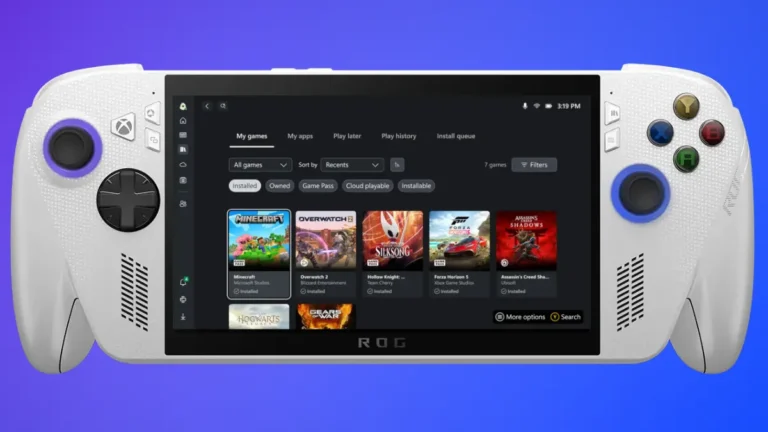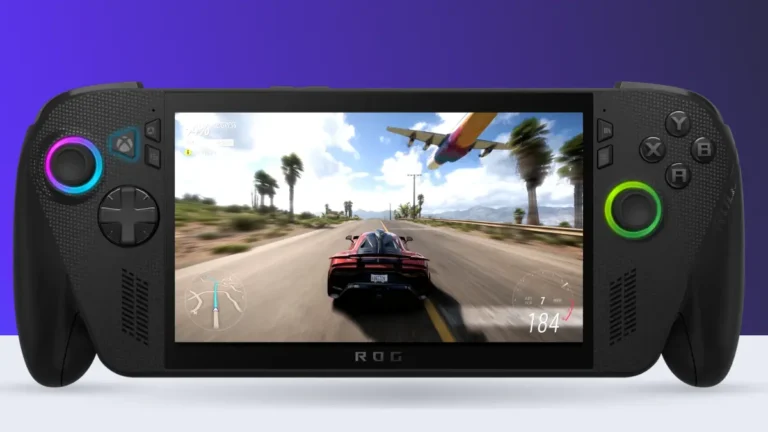

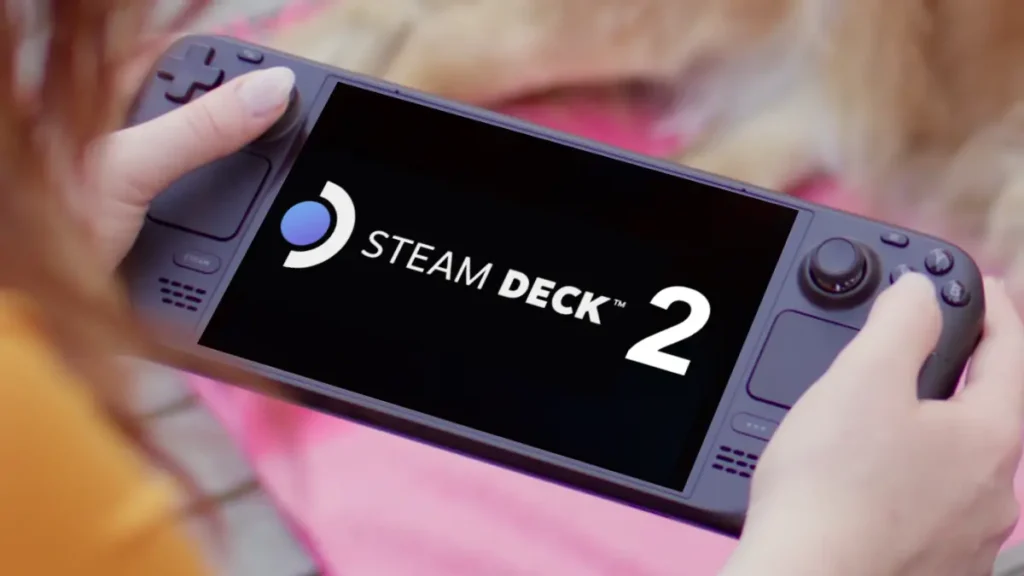
The Steam Deck 2 is on everyone’s mind as Valve’s original handheld gaming PC approaches its third anniversary. When the Steam Deck launched back in 2022, it sparked a revolution that transformed portable PC gaming. Fast forward to today, and the Steam Deck is now three-year-old technology facing stiff competition from devices like the ROG Ally X and Lenovo Legion Go.
While Valve’s handheld still holds its own, the time has come to start thinking about what the Steam Deck 2 should bring to the table. Here’s our wishlist of features we hope to see in Valve’s next-generation handheld.
1. Keep the Price Accessible
The original Steam Deck launched at a very reasonable $399, making it accessible to a wide audience of gamers. This pricing strategy was brilliant because Valve could afford to subsidize the hardware costs, knowing that users would funnel money back through Steam game purchases.
Meanwhile, competitors have gone in a different direction, with devices like the MSI Claw 8 AI+ commanding $1,000 price tags. For the Steam Deck 2, we hope Valve maintains its philosophy of accessibility. Yes, inflation and tariffs will likely push the price higher than the original, but keeping it in the $450-550 range would preserve what made the Steam Deck special. An affordable Steam Deck 2 means mass adoption, and mass adoption means a thriving ecosystem for everyone.
2. Longer Battery Life
Battery life remains the Achilles’ heel of every gaming handheld on the market, and the Steam Deck is no exception. Depending on what you’re playing, the current model lasts anywhere from two to eight hours, with demanding AAA titles draining the battery in just two to three hours.
For the Steam Deck 2, we need a realistic minimum of four to five hours even when playing intensive games. Here’s where an interesting trade-off comes into play: keeping the 800p display resolution. While higher resolution screens look sharper, they consume significantly more power. We’d gladly take an 800p display with six hours of battery life over a 1080p screen that dies in three hours.
3. More Powerful and Efficient Chip
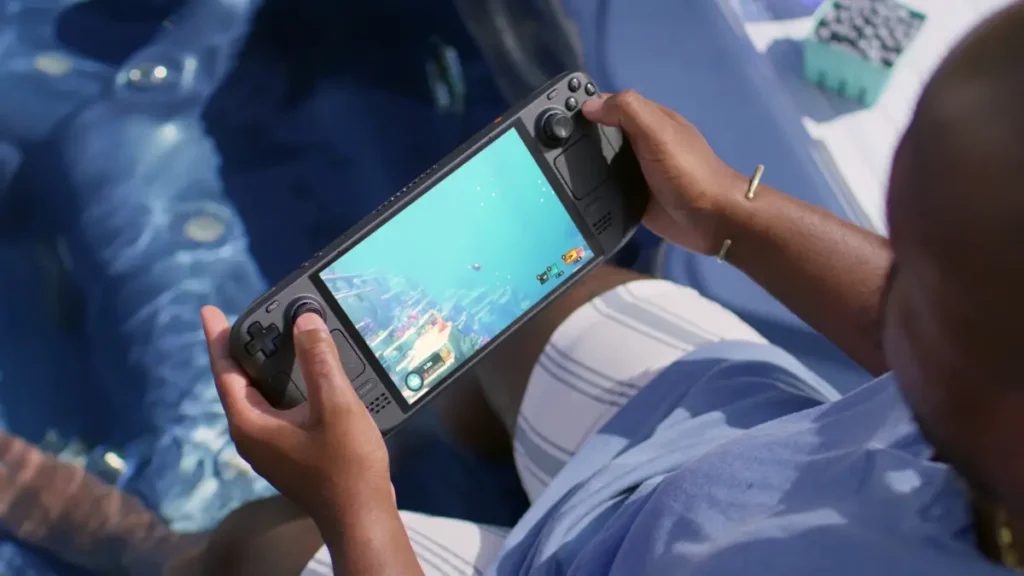
The current Steam Deck runs on a custom AMD APU featuring Zen 2 CPU cores and RDNA 2 graphics architecture. For the Steam Deck 2, we’re hoping for AMD’s latest RDNA 4 graphics paired with Zen 5 CPU architecture.
This combination would deliver better performance per watt, which is crucial for battery life. More importantly, it would bring modern features like improved ray tracing support and compatibility with the latest FSR technology that AMD will offer at launch, which could be a real game-changer for performance. The Steam Deck 2 needs to deliver meaningfully better performance while maintaining that sweet spot around 15W power consumption.
4. Hall Effect Sticks
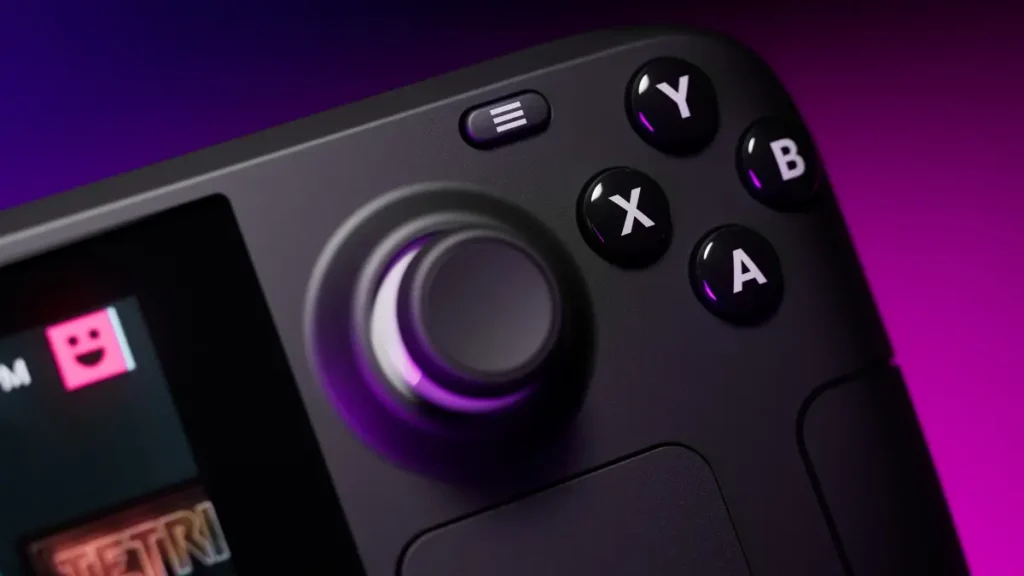
Analog stick drift has plagued gaming controllers for years, and the Steam Deck isn’t immune to this problem. After a year or two of heavy use, many owners report their sticks developing drift, requiring repairs or replacements.
The solution exists and it’s called hall effect joysticks. These use magnetic sensors instead of physical contact points, making them virtually immune to drift and significantly more durable over time. For the Steam Deck 2, this technology should be standard, not optional. Hall effect sticks would give users peace of mind that their device will feel just as responsive years down the line as it did on day one.
5. Multiple USB-C Ports
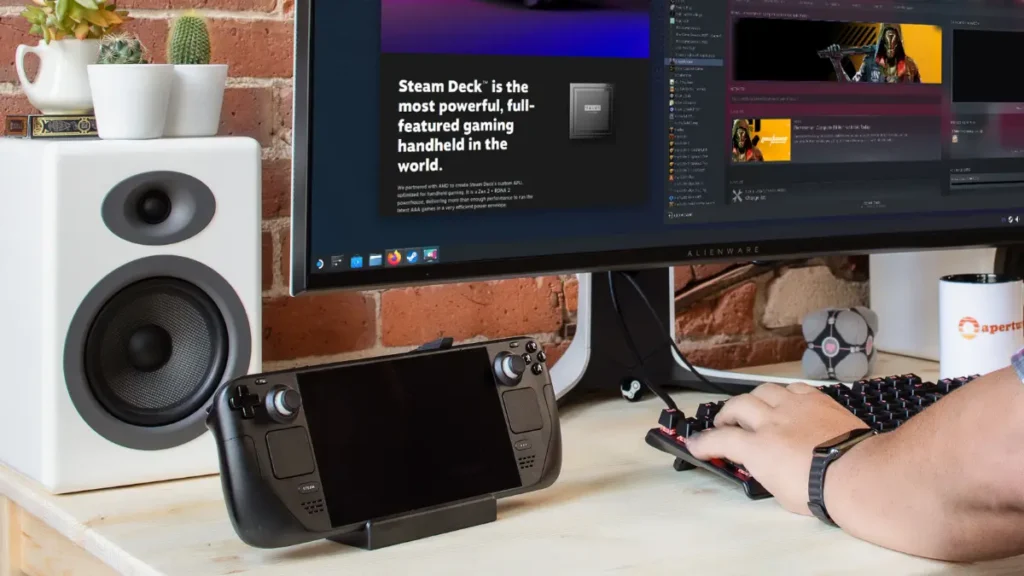
The current Steam Deck has just one USB-C port located on the bottom of the device. While functional, this single-port design creates headaches when using accessories or docking stations.
The Steam Deck 2 needs a minimum of two USB-C ports, ideally one on the bottom and another on the side or top. This simple addition would dramatically improve the user experience. You could charge and use accessories simultaneously without adapters, and docking stations would become simpler and more reliable.
6. Quieter Cooling Solution
The Steam Deck’s cooling fan does its job keeping temperatures in check, but it’s noticeably loud during intensive gaming sessions. Modern vapor chamber cooling systems have proven effective in other handhelds like the Lenovo Legion Go.
For the Steam Deck 2, we’d love to see Valve invest in a more advanced cooling solution that balances thermal performance with acoustic comfort. Better thermal paste and optimized fan curves would help. Possibly vapor chamber technology could make the device significantly quieter. This wouldn’t sacrifice cooling capacity.
7. VRR and Adaptive Sync Support
Variable refresh rate technology has become standard in modern gaming displays, yet the Steam Deck lacks this feature entirely. VRR and adaptive sync eliminate screen tearing and provide smoother gameplay when frame rates fluctuate.
An adaptive refresh range of 40-60Hz would be ideal for the Steam Deck 2, matching frame output with display refresh for a consistently smooth experience. Beyond just visual quality, VRR also enables better battery optimization. This isn’t a luxury feature anymore, it’s a baseline expectation for premium gaming displays.
8. Lighter and Slimmer Design
At 669 grams, the original Steam Deck is noticeably heavy during extended gaming sessions. Compare that to the ROG Ally at 608 grams or even the Nintendo Switch OLED at 420 grams, and you can feel the difference.
While we’re realistic about the Steam Deck 2 never reaching Switch weight levels, there’s definitely room for improvement. Its more powerful hardware and larger battery make it heavier by necessity. Still, a target weight around 580-600 grams would be ideal. The device would then be much more comfortable for long gaming sessions. Ultimately, this wouldn’t require significant compromises.
9. Faster Wi-Fi 7 Support
The current Steam Deck uses Wi-Fi 5, which feels dated in 2025. However, for a device that relies heavily on downloading games, streaming content, and cloud gaming services, network connectivity matters enormously.
Wi-Fi 7 support in the Steam Deck 2 would bring dramatically faster game downloads from Steam, better performance in cloud gaming services like GeForce Now and Xbox Cloud Gaming, and significantly lower latency for online multiplayer. This isn’t just about future-proofing, it’s about delivering the best possible experience today.
10. Built-in Kickstand
It’s honestly surprising that the original Steam Deck launched without a built-in kickstand. This basic feature appears on the Nintendo Switch, Lenovo Legion Go, and ASUS ROG Ally, yet Valve’s handheld requires you to prop it against something or buy third-party accessories.
A sturdy, integrated kickstand would enable table-top gaming with external controllers, make the device perfect for watching videos or streams during downtime, and provide a stable viewing angle for non-gaming tasks. This should be a no-brainer inclusion for the Steam Deck 2.
What We Know (and Don’t Know) About Steam Deck 2
Before we get too excited about our wishlist, it’s important to acknowledge that Valve hasn’t officially announced anything about a Steam Deck 2. The handheld gaming landscape is full of speculation, with some industry observers suggesting a 2026 release while others point to 2028 or even later.
Anyone familiar with “Valve Time” knows that the company operates on its own schedule, sometimes taking years longer than expected to release products. There’s even the possibility that a true Steam Deck 2 might not arrive for quite some time, with Valve potentially opting for incremental updates instead.
Whatever happens and whenever it happens, we hope Valve takes the lessons learned from three years of Steam Deck ownership and competition to deliver something special. The original Steam Deck proved that PC gaming handhelds could go mainstream. The Steam Deck 2 has the opportunity to perfect the formula.
What features would you most want to see in the Steam Deck 2? Let us know in the comments below.

Hardware. Specs. Benchmarks.
LoadMaster breaks down handheld performance to the last frame. Specializing in deep comparisons between devices like the Switch 2, Steam Deck, and ROG Ally, he focuses on specs, chipsets, battery life, and thermal behavior. If it’s measurable, he’s on it.