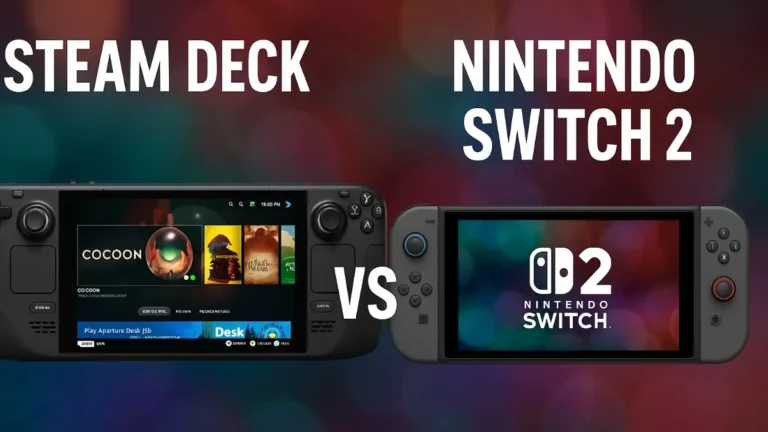


The handheld gaming market has exploded in 2024, and the Steam Deck vs ROG Ally debate continues to dominate gaming discussions. Despite the ROG Ally X launching in July 2024, this comparison remains more relevant than ever as both devices represent fundamentally different approaches to portable PC gaming. For this comparison, we’re focusing on the Steam Deck OLED model as it offers the most features and represents Valve’s latest technology. While other manufacturers focus on incremental updates, these two handhelds offer distinct ecosystems that cater to different gaming preferences and use cases.
Bottom Line Up Front: The ROG Ally X dominates in raw performance and Windows flexibility, while the Steam Deck OLED excels in battery efficiency, display quality, and seamless Linux gaming experience.
| Feature | ASUS ROG Ally X | Steam Deck OLED |
|---|---|---|
| Processor | AMD Ryzen Z1 Extreme (Zen 4) | AMD Van Gogh (Zen 2) |
| CPU Cores | 8 cores / 16 threads | 4 cores / 8 threads |
| GPU | 12 RDNA 3 CUs, 2.7GHz | 8 RDNA 2 CUs, 1.6GHz |
| RAM | 24GB LPDDR5X-7500 | 16GB LPDDR5-6400 |
| Display | 7″ FHD LCD, 120Hz | 7.4″ HDR OLED, 90Hz |
| Storage | 1TB PCIe 4.0 SSD | 512GB / 1TB NVMe SSD |
| Battery | 80Wh | 50Wh |
| Weight | 678g (1.49 lbs) | 640g (1.41 lbs) |
| Price | $799 | $549 / $649 |
| OS | Windows 11 Home | SteamOS 3 |
Steam Deck vs ROG Ally Design and Build Quality
The Steam Deck vs ROG Ally design battle showcases two distinct philosophies. Initially, the ROG Ally X features a lightweight 1.49 lb chassis and redesigned ergonomics with taller, more substantial handgrips, refined macro keys, flat surface angles, and upgraded joysticks for a comfortable gaming experience.
The Steam Deck OLED measures 298mm x 117mm x 49mm and weighs approximately 640 grams, making it slightly more compact and lighter than the ROG Ally X. Both devices prioritize comfort during extended gaming sessions, but the Steam Deck’s symmetrical trackpads and established button layout provide a more familiar console-like experience.
The ROG Ally X sports a sleek black finish that matches its premium positioning, while the Steam Deck OLED maintains Valve’s industrial aesthetic. Both feature high-quality materials and solid construction that can withstand daily portable use.
Display Technology: OLED vs High-Refresh LCD
This category represents the most significant difference in the Steam Deck vs ROG Ally comparison. Specifically, the Steam Deck OLED features a 7.4″ HDR OLED display with 1280×800 resolution, 90Hz refresh rate, 1,000 nits peak brightness, and >1,000,000:1 contrast ratio with 110% P3 color gamut.
The ROG Ally X counters with a 7-inch FHD (1920 x 1080) IPS display with 120Hz refresh rate, 500nits brightness, and AMD FreeSync Premium support. While the ROG Ally X offers higher resolution and refresh rates for competitive gaming, the Steam Deck’s OLED technology delivers superior color accuracy, deeper blacks, and better contrast for immersive single-player experiences.

The Steam Deck OLED’s HDR-enabled panel features a 0.4 inches larger display than previous models with significantly improved color contrast and sharper image quality. For visual fidelity in story-driven games, the Steam Deck OLED takes the crown, while the ROG Ally X’s higher resolution and refresh rate benefit fast-paced competitive titles. Furthermore, to explore all available Steam Deck display options and configurations, check our detailed Steam Deck models guide for complete specifications.
Gaming Performance: Steam Deck vs ROG Ally Power Comparison
Moreover, performance represents the most crucial aspect of any Steam Deck vs ROG Ally comparison. Additionally, the ROG Ally X features the AMD Ryzen Z1 Extreme processor with RDNA 3 graphics, 24GB of LPDDR5x RAM, delivering up to 8.6 teraflops of graphics performance.
The Steam Deck OLED runs on a 6nm AMD APU with Zen 2 4c/8t CPU at 2.4-3.5GHz and 8 RDNA 2 CUs at 1.6GHz, providing 1.6 TFlops FP32 performance. However, this represents approximately a 5x performance advantage for the ROG Ally X in theoretical compute power.
Real-world gaming performance reflects these specifications. The ROG Ally X consistently achieves 60+ FPS in modern AAA titles at high settings, while the Steam Deck OLED typically targets 30-60 FPS at medium settings. However, SteamOS optimization and Valve’s game verification system ensure consistent performance across verified titles.
For demanding games like Cyberpunk 2077, Elden Ring, and Microsoft Flight Simulator, the ROG Ally X provides significantly better performance and visual quality. The Steam Deck OLED excels at indie games, older AAA titles, and games specifically optimized for its hardware profile.

Battery Life Reality Check: Capacity vs Efficiency
Battery performance in the Steam Deck vs ROG Ally battle tells an interesting story. Additionally, the ROG Ally X features a massive 80Wh battery that allows extended gameplay away from power outlets, with fast charge technology enabling 0% to 50% charging in just 30 minutes.
The Steam Deck OLED includes a 50Whr battery providing 3-12 hours of gameplay depending on the title. Despite the smaller battery, the Steam Deck OLED achieves up to 50% longer battery life thanks to the more efficient processor and optimized OLED panel.
Furthermore, in practical testing, the ROG Ally X delivers 2-4 hours of AAA gaming and 6-8 hours for indie titles. In contrast, the Steam Deck OLED achieves 4-6 hours for demanding games and 8-12 hours for less intensive titles. Therefore, the Steam Deck’s superior power efficiency makes it the better choice for long gaming sessions without access to charging.
Software Ecosystem Battle: Windows Freedom vs SteamOS Simplicity
The software experience represents the philosophical core of the Steam Deck vs ROG Ally debate. On one hand, the ROG Ally X runs Windows 11 Home and supports Steam, Game Pass, Epic, GOG, and more, ensuring access to virtually any PC game. This provides maximum flexibility but requires more technical knowledge for optimization.
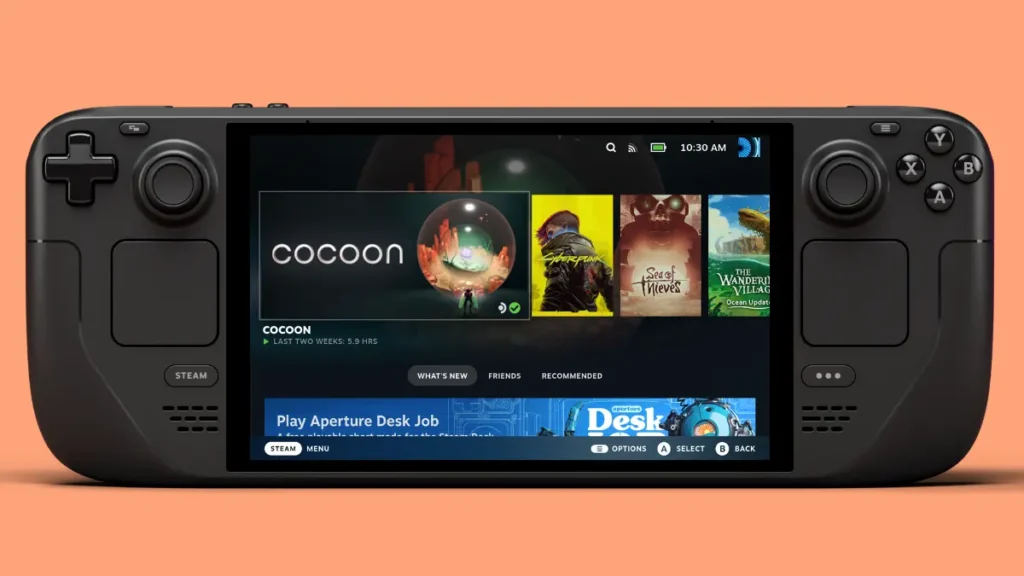
On the other hand, the Steam Deck OLED ships with SteamOS 3 (Arch-based) featuring KDE Plasma desktop, offering a console-like experience with automatic game optimization.While users can install Windows on the Steam Deck, SteamOS provides superior power management and user experience for handheld gaming.
The ROG Ally X excels for users who want full PC functionality, including desktop applications, multiple game stores, and Windows-exclusive titles. Therefore, the Steam Deck OLED appeals to users who prioritize simplicity, reliability, and optimized gaming performance without technical tweaking.
Price and Value Analysis: Premium Power vs Accessible Excellence
Pricing reveals the target markets for each device. Specifically, the ROG Ally X launched for $799.99 in July 2024, positioning it as a premium handheld gaming solution. Meanwhile, the Steam Deck OLED starts at $549 for the 512GB model and $649 for the 1TB variant, offering exceptional value for the hardware provided.
Specifically, the ROG Ally X justifies its premium pricing with superior performance, more RAM, larger storage, and Windows flexibility. In contrast, the Steam Deck OLED provides outstanding value with its superior display technology, optimized software experience, and proven reliability.
Consequently, for budget-conscious gamers seeking maximum performance per dollar, the Steam Deck OLED represents exceptional value. For enthusiasts wanting the most powerful handheld gaming experience regardless of cost, the ROG Ally X delivers unmatched performance.

Steam Deck vs ROG Ally: Which Gaming Handheld Wins?
In conclusion, the Steam Deck vs ROG Ally decision depends on your gaming priorities and technical preferences.
Choose the ROG Ally X if you want:
- Maximum performance in AAA games
- Full Windows compatibility and flexibility
- Access to multiple game stores and platforms
- Higher resolution display for competitive gaming
- Premium build quality and features
Choose the Steam Deck OLED if you prefer:
- Superior display quality with OLED technology
- Longer battery life and better efficiency
- Console-like simplicity and reliability
- Exceptional value for money
- Optimized Linux gaming experience
Overall, both devices represent the pinnacle of handheld gaming technology in 2024. The ROG Ally X pushes performance boundaries while the Steam Deck OLED perfects the portable gaming formula. Your choice should align with whether you prioritize raw power and Windows flexibility or optimized efficiency and exceptional display quality.

Hardware. Specs. Benchmarks.
LoadMaster breaks down handheld performance to the last frame. Specializing in deep comparisons between devices like the Switch 2, Steam Deck, and ROG Ally, he focuses on specs, chipsets, battery life, and thermal behavior. If it’s measurable, he’s on it.