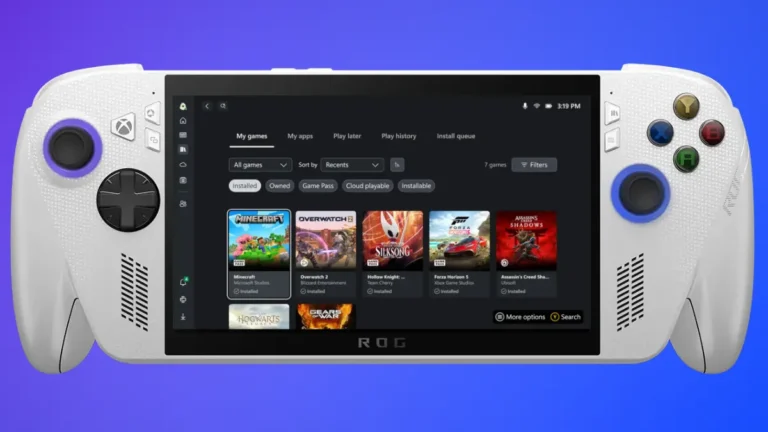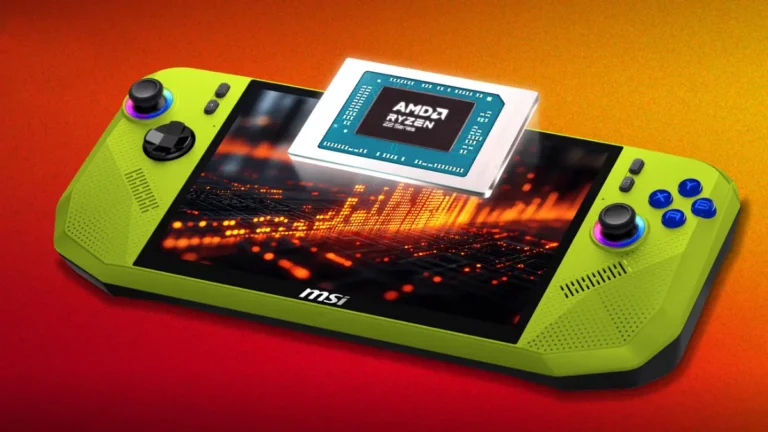

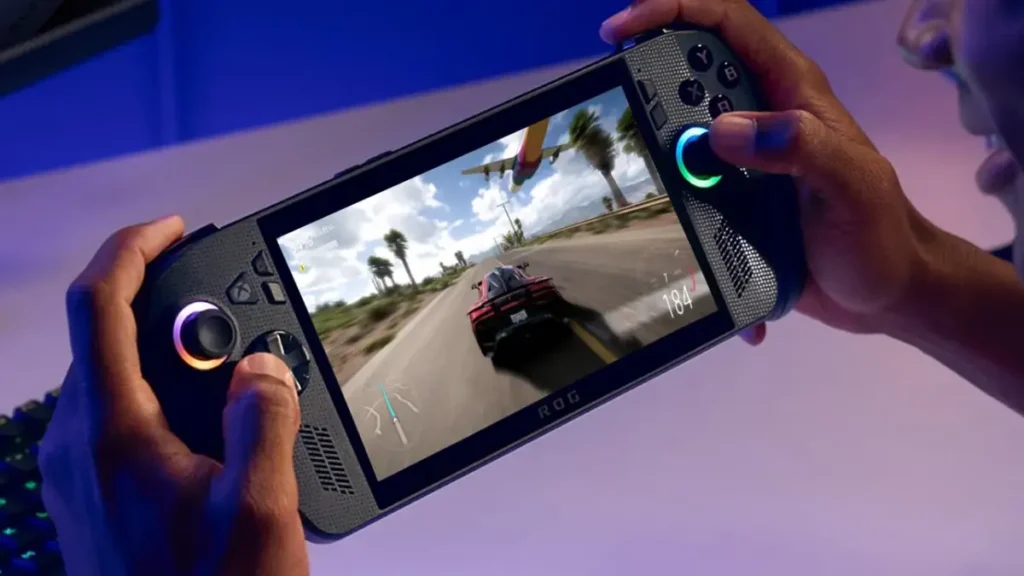
The ROG Xbox Ally X represents a collaboration between ASUS and Microsoft, bringing together premium hardware with Xbox ecosystem integration. Priced at $999, this Windows gaming handheld positions itself as a flagship device in the portable gaming market. But does it deliver enough value to justify that steep price? After extensive testing, we’re here to provide a comprehensive look at what works, what doesn’t, and whether the ROG Xbox Ally X deserves a place in your gaming setup.
Before diving deeper, it’s worth noting that ASUS also offers the standard ROG Xbox Ally at $599, featuring less powerful specs but a more accessible price point. We’ll be reviewing that model soon, so stay tuned.
Understanding What the ROG Xbox Ally X Actually Is
Let’s address the elephant in the room immediately: despite the Xbox branding, the ROG Xbox Ally X is not an Xbox console. Instead, it’s a Windows 11-powered gaming handheld that plays PC versions of games, not Xbox console titles from your Xbox library.
The device supports Xbox Play Anywhere titles, which covers approximately 1,500 games that work across both Xbox consoles and PC. However, many popular Xbox games you own on console won’t be playable unless you stream them from your Xbox console – essentially turning the Ally X into something similar to a PlayStation Portal.
What it actually offers is multi-platform gaming access. You can install and play games from Steam, Epic Games Store, GOG, Battle.net, and Xbox PC Game Pass. For PC gamers with a Game Pass subscription, this makes perfect sense. However, for Xbox console fans expecting to access their entire digital library natively, disappointment awaits.
The Xbox branding creates expectations that this device simply cannot fulfill as a traditional Xbox experience. It’s more accurate to think of it as a premium Windows gaming handheld with Xbox integration, rather than a portable Xbox console.
Full Hardware Specs
| Specification | Details |
|---|---|
| Model | ASUS ROG Xbox Ally X |
| Processor | AMD Ryzen Z2 AI Extreme (Zen 5, up to 5 GHz) |
| Graphics | AMD Radeon RDNA 3.5 (16 Compute Units) |
| RAM | 24GB LPDDR5X-8000 |
| Storage | 1TB PCIe Gen 4 NVMe SSD (user-replaceable) |
| Display | 7″ Full HD IPS (1920×1080), 120Hz, VRR/FreeSync, 500 nits |
| Battery | 80Wh |
| Power Modes | Silent (13W), Performance (17W), Turbo (25W/35W plugged) |
| Ports | 1x USB 4 Type-C, 1x USB 3.2 Gen 2 Type-C, 3.5mm audio jack, microSD card reader |
| Connectivity | Wi-Fi 6E, Bluetooth 5.4 |
| Operating System | Windows 11 with Xbox Full Screen Experience |
| Dimensions | 11.5 x 4.8 x 2 inches (292 x 122 x 51 mm) |
| Weight | 1.58 lbs (715g) |
| Price | $999 / £799 |
Design and Ergonomics: Where It Excels
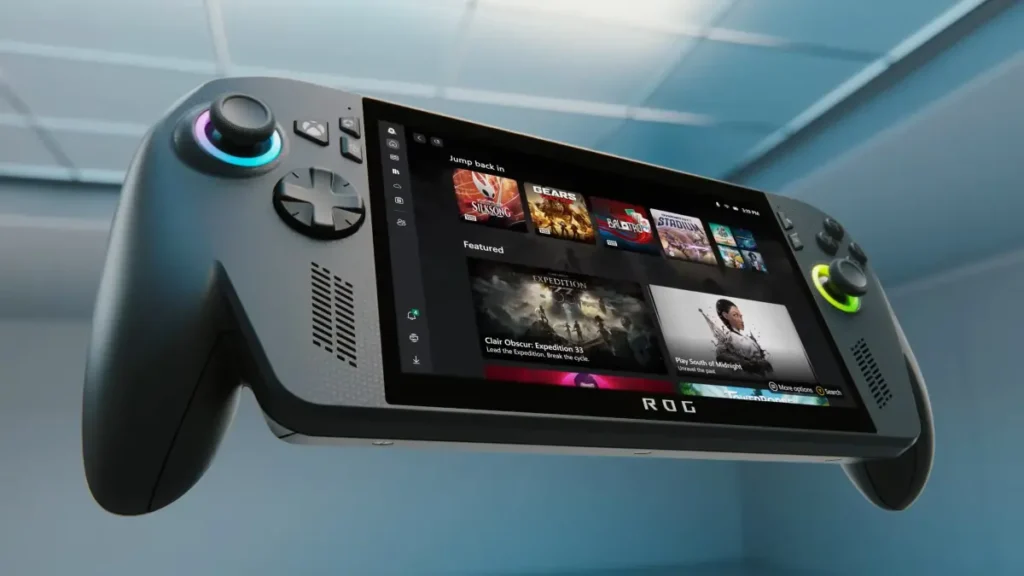
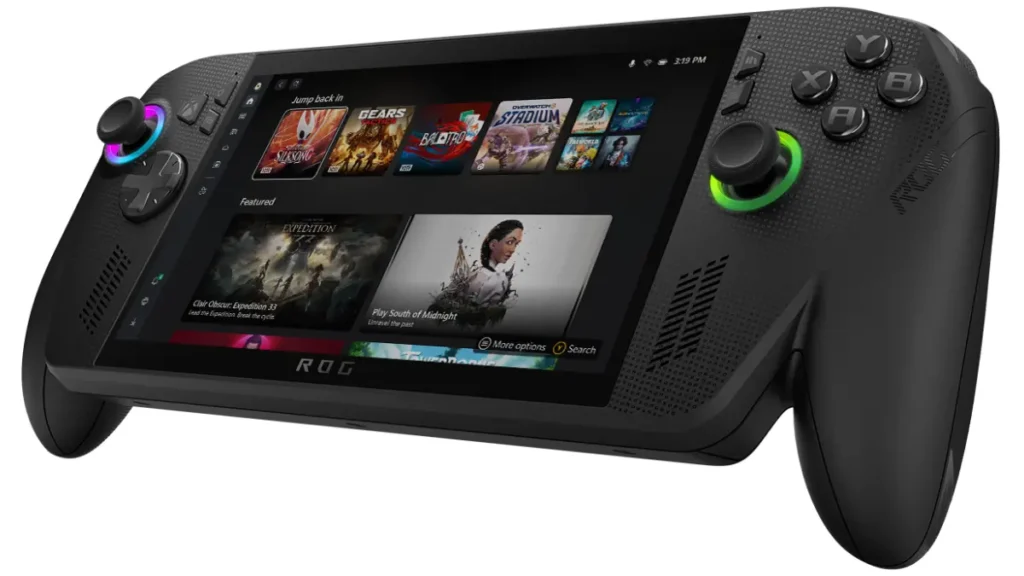
If there’s one area where this handheld truly shines, it’s ergonomics. ASUS has redesigned the grips based on Xbox controller design, and the result is remarkable. Furthermore, the textured finish features alternating “Xbox” and “ROG” lettering that provides excellent grip without feeling abrasive.
Weighing 1.58 pounds, the device distributes its weight exceptionally well. During extended gaming sessions lasting several hours, we experienced minimal hand fatigue – a significant achievement for a handheld this powerful. The Xbox-inspired grips are genuinely comfortable, making this the most ergonomic gaming handheld currently available.
The build quality is solid, though it’s constructed from plastic rather than premium metal materials. The device is noticeably thicker than competitors like the Steam Deck, but this added bulk contributes to the improved comfort rather than detracting from it.
Control layout is logical and well-thought-out. The dedicated Xbox button provides quick access to the Game Bar, while programmable back buttons add extra functionality. Additionally, connectivity options include USB 4 Type-C and USB 3.2 Gen 2 Type-C ports, a 3.5mm audio jack (increasingly rare on modern devices), and a microSD card slot for storage expansion.
Display and Audio: What the ROG Xbox Ally X Offers
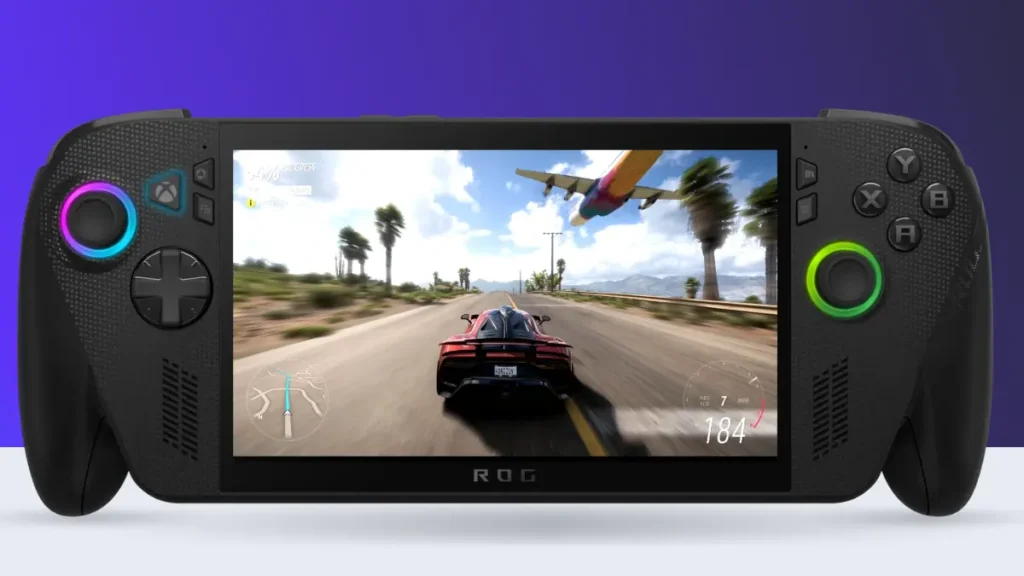
The ROG Xbox Ally X features a 7-inch Full HD IPS display (1920×1080 resolution) with a 120Hz refresh rate and support for VRR/FreeSync technology. Peak brightness reaches 500 nits, which is adequate for indoor gaming but may struggle in bright outdoor conditions.
The IPS panel delivers solid viewing angles and decent color reproduction. For gaming purposes, it’s perfectly serviceable – games look sharp, motion is smooth, and the high refresh rate enhances fast-paced action.
However, here’s where criticism is warranted: at $999, the lack of an OLED display is disappointing. The Steam Deck OLED costs $549 and offers superior image quality with deeper blacks, vibrant colors, and better contrast. When a device costs twice as much but provides an inferior display technology, it’s a legitimate concern.
Audio performance from the dual speakers is surprisingly good for a device this size. They deliver clear sound with reasonable volume, though serious gamers will likely prefer the 3.5mm headphone jack for a more immersive experience with quality headphones.
ROG Xbox Ally X Performance and Specs
Under the hood, the device packs AMD’s Ryzen Z2 AI Extreme processor, built on Zen 5 CPU architecture and RDNA 3.5 GPU architecture. It’s paired with 24GB of LPDDR5X-8000 RAM and a 1TB PCIe Gen 4 NVMe SSD. The storage is user-replaceable, which is a practical touch for those wanting to upgrade capacity down the line.
The 80Wh battery is identical to last year’s ROG Ally X, while the dual-fan cooling system keeps temperatures in check during demanding gaming sessions.
Power Modes and Real-World Performance
The ROG Xbox Ally X offers three distinct power profiles:
Silent Mode (13W): Suitable for indie games and less demanding titles. Keeps the device quiet and extends battery life significantly.
Performance Mode (17W): The sweet spot for most gaming scenarios. Balances performance with battery efficiency.
Turbo Mode (25W on battery, 35W when plugged in): Maximum performance for the most demanding games.
Let’s look at actual gaming performance without marketing fluff:
Cyberpunk 2077: Approximately 40-60 FPS on medium to high settings with FSR Quality upscaling in Performance mode. At maximum 35W Turbo with Frame Generation enabled, can reach 80+ FPS at 1080p. Highly playable with good visual quality.
Shadow of the Tomb Raider: Around 45-60+ FPS at 900p on optimized settings at 25W. Excellent performance for this demanding title.
Red Dead Redemption 2: Approximately 40-50 FPS on optimized settings at 1080p in Performance mode, reaching up to 60 FPS average at maximum 35W Turbo. Smooth and enjoyable gameplay experience.
The pattern is clear: this handheld delivers strong performance for modern AAA titles with reasonable settings adjustments. While you won’t always achieve maxed-out settings at locked 60 FPS, the device handles demanding games remarkably well. Enabling upscaling technologies like FSR helps maintain both visual quality and smooth frame rates.
Older titles and indie games run excellently without any compromises. If your library skews toward less demanding games, the Ally X delivers consistently smooth performance.
One area that genuinely impresses is the cooling system. The dual-fan setup operates quietly even under load, maintaining comfortable temperatures without excessive noise. During intense gaming sessions, the device rarely becomes uncomfortably loud – a significant achievement.

Xbox Full Screen Experience: Promise Versus Reality
The Xbox Full Screen Experience is Microsoft’s attempt to create a console-like interface for Windows gaming handhelds. Specifically, the concept is promising: minimize Windows desktop processes, provide an Xbox-styled UI for easy controller navigation, and aggregate games from multiple storefronts into a single library.
What Works Well
When functioning properly, the Xbox UI is cleaner and more intuitive than navigating standard Windows with a controller. The multi-store integration genuinely adds value – seeing games from Steam, Epic, GOG, and Xbox PC in one unified library is convenient.
The Armory Crate SE overlay, accessed via the dedicated button, provides quick access to power profiles, brightness, volume, and various system settings. It’s well-designed and genuinely useful during gameplay.
The Reality of Daily Use
Unfortunately, the execution doesn’t match the ambition. The initial setup process requires time, multiple updates, and patience. Out of the box, the ROG Xbox Ally X isn’t ready to deliver the promised experience – instead, you’ll spend considerable time updating Windows, installing the Xbox app updates, and configuring various launchers.
During regular use, we encountered several persistent issues:
The UI occasionally freezes, requiring a forced restart. Control inputs sometimes become unresponsive, necessitating a wait for the system to catch up. The sleep mode is unreliable – sometimes the device drains battery while asleep, other times it won’t wake properly, and occasionally sleep mode simply doesn’t activate.
Each game launcher brings its own login requirements, updates, and additional launchers. Playing a game from Steam might require opening Steam’s interface, then the publisher’s launcher (like CD Projekt Red’s for Cyberpunk 2077), then finally the game itself. This multi-step process contradicts the promised console simplicity.
Windows notifications, updates, and prompts still intrude despite Microsoft’s optimization efforts. The operating system finds ways to remind you that underneath the Xbox veneer, this is still very much a Windows PC.
Honest Assessment
The Xbox Full Screen Experience represents a step in the right direction. It’s better than navigating standard Windows with a controller. However, it’s nowhere near the polished, seamless experience that SteamOS provides on the Steam Deck.
This software layer requires patience and understanding of PC gaming ecosystems. If you’re comfortable troubleshooting occasional issues and don’t mind the lack of true plug-and-play convenience, it’s workable. If you expect console-level simplicity, prepare for frustration.
Battery Life Expectations
The device includes an 80Wh battery – a decent capacity for a gaming handheld. However, battery life varies dramatically based on usage:
Turbo Mode with AAA Games: Expect 2 to 2.5 hours. This is acceptable for short gaming sessions but inadequate for long trips without access to power.
Performance Mode: Approximately 3 to 3.5 hours for most games. This is the realistic expectation for typical usage.
Silent Mode / Indie Games: Can extend to 4-5+ hours or more with less demanding titles.
Adjusting screen brightness and implementing frame rate caps can extend battery life further. However, for a device at this price point, the battery performance is average at best. The Steam Deck OLED delivers comparable or better battery life at half the cost.
For extended gaming sessions away from power outlets, carrying the charging adapter becomes necessary. This isn’t necessarily a dealbreaker, but it’s worth considering for travelers.
ROG Xbox Ally X Price: The $999 Problem
Here’s where objectivity demands honesty: at $999, this price is difficult to justify when examining the competition and alternatives.
What $999 Can Buy Instead
Steam Deck OLED ($549): Superior OLED display, more polished software experience, longer battery life, and costs nearly half as much. The Ally X has better raw performance, but the Steam Deck OLED delivers a better overall experience for most users. While Valve hasn’t announced the Steam Deck 2 yet, our wishlist for Steam Deck 2 shows what the next generation of handhelds should prioritize.
Original ROG Ally X ($799): Nearly identical specifications with the same 24GB RAM, 1TB storage, and 80Wh battery, but costs $200 less. The new Ryzen Z2 Extreme processor provides improved performance, but is it worth $200? For many, probably not.
Gaming Laptops (~$1000): At this price point, you can purchase gaming laptops with larger screens, better performance, more versatility for work and entertainment, and superior upgrade paths.
You could buy a Steam Deck OLED plus a Nintendo Switch 2 for less than the cost of one ROG Xbox Ally X. That’s two excellent gaming devices covering Nintendo exclusives and PC gaming, versus one Windows handheld with software issues.
What the Price Should Deliver
At $999, expectations are high. Buyers rightfully expect:
- Flawless software experience
- Premium display technology (OLED)
- Exceptional battery life
- Polish in every aspect
The ROG Xbox Ally X delivers:
- Buggy software with inconsistent behavior
- IPS display (adequate but not premium)
- Average battery life for the category
- Excellent ergonomics (the one true premium aspect)
The hardware is solid, but $999 demands excellence across the board. This handheld delivers:
- Buggy software with inconsistent behavior
- IPS display (adequate but not premium)
- Average battery life for the category
- Excellent ergonomics (the one true premium aspect)
The ROG Xbox Ally Alternative
For those interested in the Xbox ecosystem integration but deterred by the price, ASUS offers the standard ROG Xbox Ally at $599. It features:
- AMD Ryzen Z2 A processor
- 16GB RAM
- 512GB storage
- 60Wh battery
- White color scheme
This model provides a more accessible entry point with the same excellent ergonomics and Xbox Full Screen Experience, though the older Ryzen Z2 A processor delivers noticeably weaker gaming performance than the X variant.
Who Might Consider the ROG Xbox Ally X?
The target audience for this device is extremely narrow:
- Frequent travelers who need portable gaming and already own extensive PC game libraries
- Tech enthusiasts with disposable income who prioritize having the latest hardware
- Gamers for whom ergonomic comfort is the absolute priority
For everyone else – casual gamers, budget-conscious shoppers, or those seeking the best value – better alternatives exist at lower price points.
Pros and Cons
PROS:
- Exceptional ergonomics – most comfortable gaming handheld available
- Solid gaming performance for a portable device
- Quiet and efficient cooling system
- User-replaceable SSD storage
- Multi-store game library integration
- Good quality speakers
- 3.5mm headphone jack included
CONS:
- $999 price is excessive for what you receive
- Software bugs including unreliable sleep mode and UI freezing
- IPS display instead of OLED at this premium price
- Battery life is average for the performance class
- Complex setup process
- Not a true console experience despite Xbox branding
- Xbox name creates misleading expectations
Final Verdict
The ROG Xbox Ally X is a well-constructed gaming handheld featuring outstanding ergonomics and capable gaming performance. ASUS executed the hardware design brilliantly – this is genuinely the most comfortable gaming handheld you can buy today.
The Xbox Full Screen Experience shows potential for improving Windows gaming handhelds, but the execution reveals this is first-generation software. Bugs, inconsistencies, and Windows intrusions remind users that polish is still needed.
However, the fundamental issue is price. At $999, the ROG Xbox Ally X competes against devices offering OLED displays (Steam Deck OLED at $549), similar performance at lower prices (original ROG Ally X at $799), or greater versatility (gaming laptops at comparable costs).
The Steam Deck OLED delivers a superior screen, more refined software, and better battery life at half the cost. That’s hard to overlook. The hardware quality of the Ally X doesn’t compensate for the $450 price difference, especially considering the software issues.
This is a good gaming handheld held back by excessive pricing and software that needs more development time. The ergonomics are exceptional, the performance is solid, but these positives don’t justify asking consumers to pay $999 when better value clearly exists elsewhere.
Our recommendation
Wait for a significant price reduction, consider the $599 standard ROG Xbox Ally instead, or purchase the Steam Deck OLED. Unless ergonomics are your absolute priority and budget isn’t a concern, the ROG Xbox Ally X is difficult to recommend at its current asking price.
| ROG Xbox Ally X | |
|---|---|
| Overall Score | 7/10 |
| Pros |
|
| Cons |
|
Bottom Line: Excellent ergonomics and solid performance can’t justify the $999 price tag when better value exists elsewhere in the gaming handheld market.
The ROG Xbox Ally X is available now for $999 / £799. The standard ROG Xbox Ally retails for $599.

Hardware. Specs. Benchmarks.
LoadMaster breaks down handheld performance to the last frame. Specializing in deep comparisons between devices like the Switch 2, Steam Deck, and ROG Ally, he focuses on specs, chipsets, battery life, and thermal behavior. If it’s measurable, he’s on it.